

|
|
|
| Home | | | Surfboards | | | Design | | | Surfing & Media | | | Surfcast | | | About NC | | | Custom Orders | | | Contact |
| |
THE MINI GUN & THE PLANING HULL | |
| |
|
|
| |
ORIGINS of the SHORTBOARD REVOLUTION | |
| |
|
|
| |
June 3, 2022 | |
| |
|
| |
One of the many Golden Eras of surfing and surf culture and one of
only a few quantum changes in surfing, surfboard design and surf culture was
the Shortboard Revolution. This was not a change in style - but a notable
change in technique, maneuvers, where in waves maneuvers were performed,
and surfing increasingly more critical waves. These were the initial stages in
the evolution of the modern, contemporary high performance shortboard, and
every other contemporary design class. Longboard maneuvers and performance were
well into progressing from stylish turn, trim, nose ride, and stall to
performance oriented maneuvers of the same variety. Consider the classic styles
of David Nuuhiwa, Mike Hynson, Skip Frye, and Billy Hamilton and compare them
to the performance styles of Nat Young, Wayne Lynch, Bob McTavish, and Phil and
Jim Irons. One of the most notable moments and examples of high performance
longboard surfing was Nat Young's surfing at the 1966 World Championships at
Ocean Beach in San Diego. His combination of carving turns and sublime nose
riding - particularly the carving turns - set the stage for the modern
shortboard to emerge over the next few years. The major performance difference
between traditional longboarding and performance longboarding was breaking up
the long straight lines of trim, like a bird soaring and gliding on the updraft
of a wave or an ocean swell, into a series of seamless and flowing turns
combined with trim and nose riding, like a fish or sea mammal accelerating in
and around those same waves and open ocean swells. The logical direction and
first step for surfboard design to best facilitate this emerging performance
oriented surfing was to shorten boards, soon followed by evolving rockers,
profiles, outlines, bottom contours and rails. Surfing and surf culture found
itself at the doorstep of the shortboard revolution.
An emerging generation of surfers and shapers were energetically influenced by the most innovative and creative surfer shaper designers of that era, particularly Dick Brewer, Mike Diffenderfer, George Greenough, and Bob McTavish. This iconic group of surfer shapers with their open minds and their passion for evolutionary surfing and surfboard design created two primary and distinct design threads, the Mini Gun and the Planing Hull. Brewer and Diff's designs were classic early Mini Guns. McTavish and Greenough's designs were classic early planing Hulls. The historical significance of this era of evolutionary surfing and surfboard design is remarkable. The Shortboard Revolution changed surfing, surfboards, and surf culture forever. |
| |
|
| |
 |
| |
|
| |
Surfing a Mini Gun - Small Zicatela 1973 |
| |
|
| |
 |
| |
|
| |
Surfing a Planing Hull - Honolua Bay 1967 |
| |
|
| |
Understanding these two designs and their history, The Mini Gun and The
Planing Hull are defined and best described by their design features, surface
geometry, and their performance.
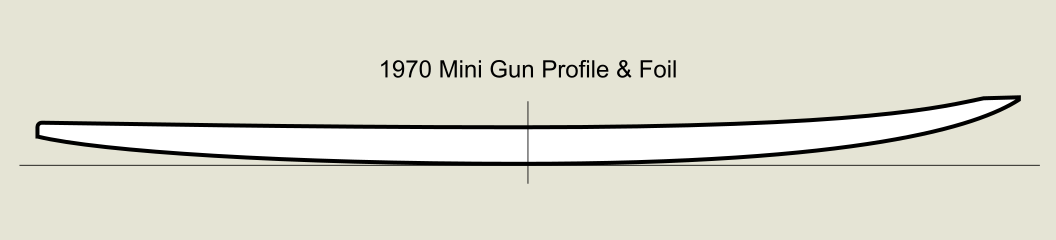
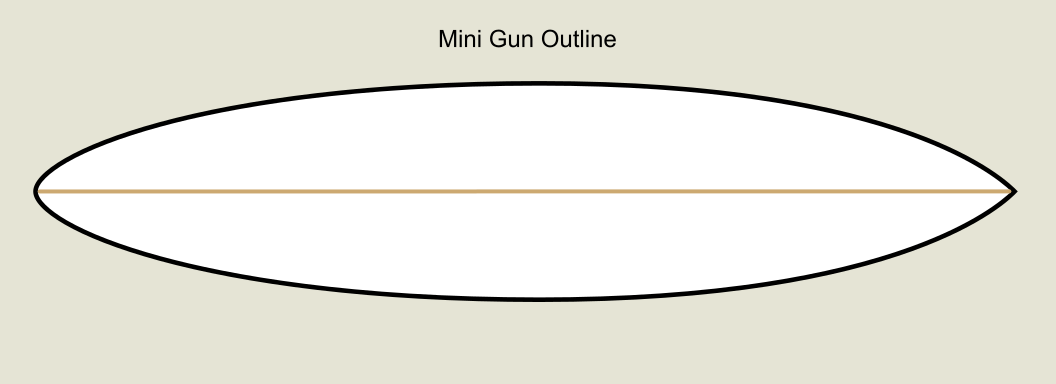
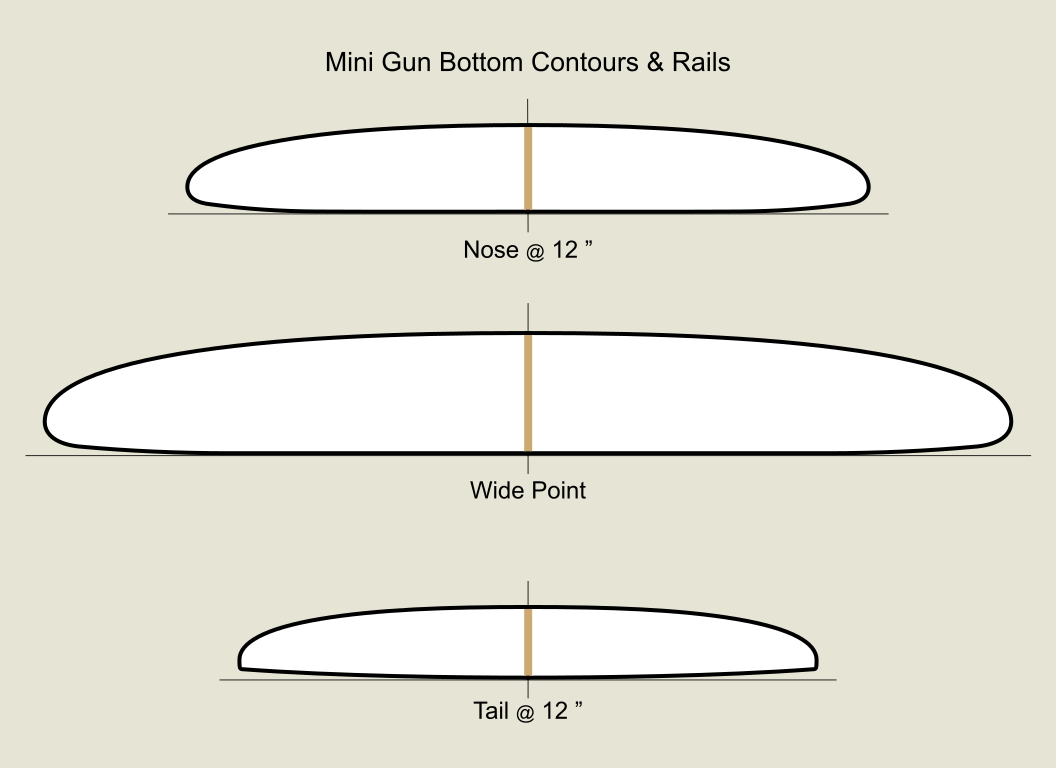
MINI GUN DESIGN FEATURES ROCKER - Notable rocker in the entry, flatter rocker mid board, and moderate tail rocker. PROFILE - Foiled with thinner nose and tail. OUTLINE - Curves with pulled in nose and tail. BOTTOM CONTOURS - Tri plane entry and mid board, occasionally featuring shallow concave in the center plane of the tri plane mid board to rolled panel vee in the tail. RAILS - Low down rails from nose to tail with hard machined edge in the tail. |
| |
 |
| |
|
| |
PLANING HULL DESIGN FEATURES
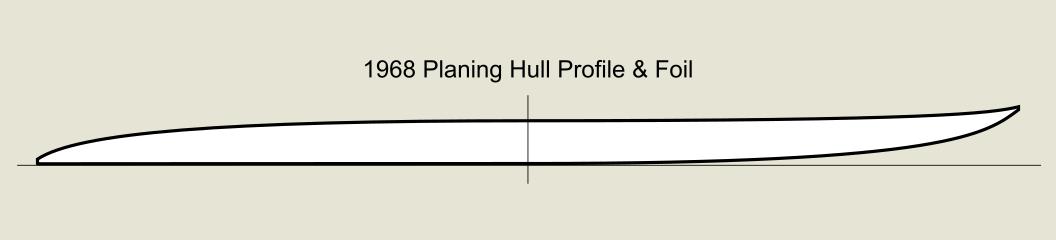
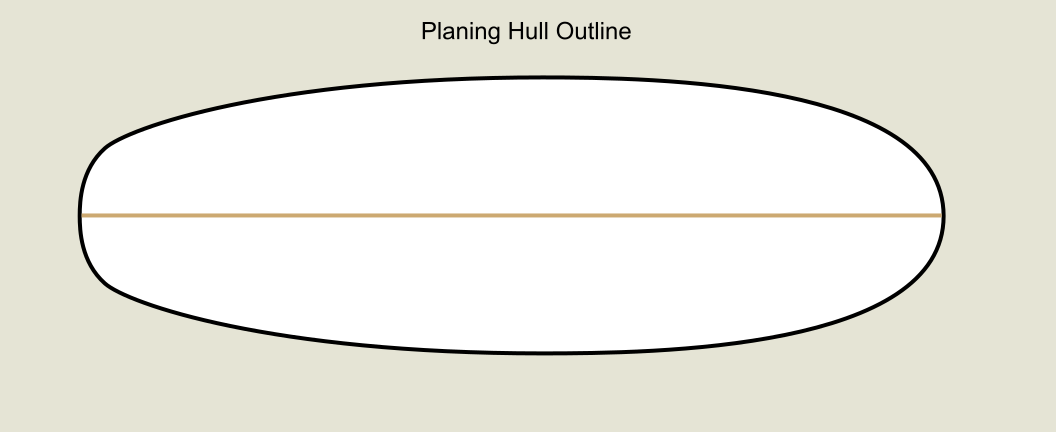
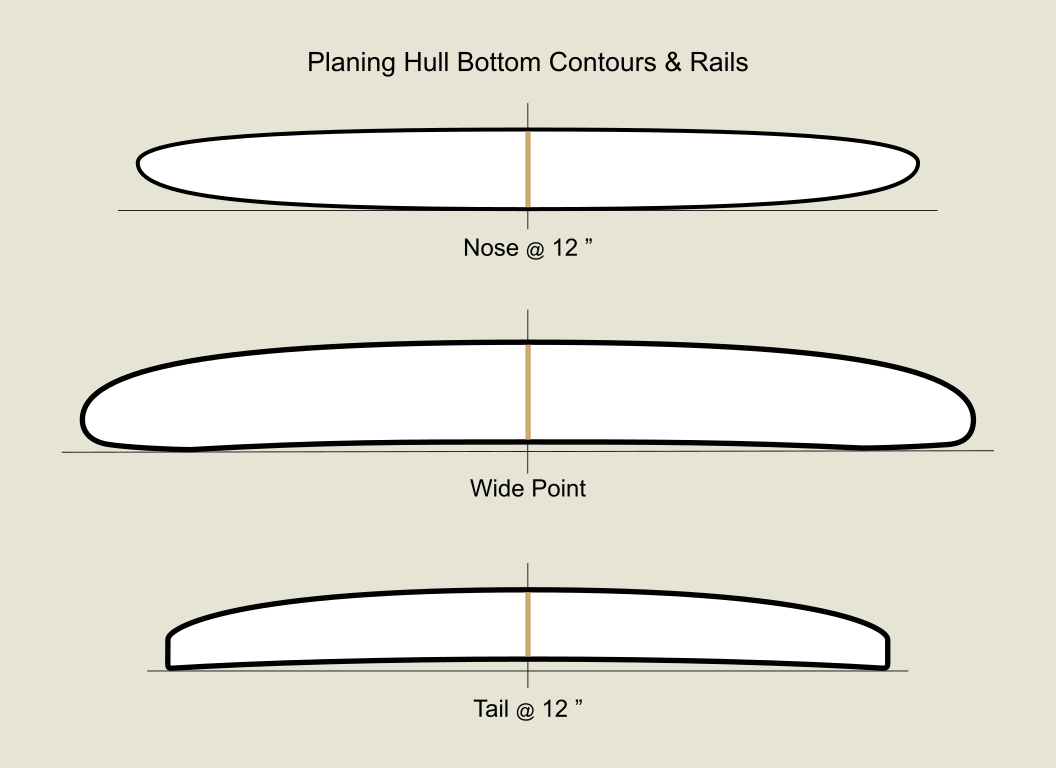
ROCKER - Low entry rocker and nearly flat rocker from mid board to tail. PROFILE - Foiled with full nose and thin tail. OUTLINE - Parallel with full nose and tail. BOTTOM CONTOURS - Rolled entry to tri plane mid board with shallow concave in the center plane to single concave tail. RAILS - Neutral nose and mid board to low in tail with hard edge in the tail. |
| |
|
| |
 |
| |
|
| |
THE DESIGNS' PERFORMANCE
MINI GUN PERFORMANCE Carving turns and speedy trim, curved rocker and outlines fit exceptionally well in the critical part of a wave tapping into the power source of waves thus offering excellent acceleration and speed. Curved outlines promote release and offer multiple arcs and options for turns. Bottom contours create lift, reduce drag, and promote smooth rail to rail transitions. Low down rails generate and sustain speed. Hard edge in the tail releases water. |
| |
|
| |
 |
| |
|
| |
Surfing a Mini Gun |
| |
|
| |
PLANING HULL PERFORMANCE Carving turns and trim, straighter rocker fits moderately in the critical part of a wave taping into the power of waves offering moderate acceleration. Parallel outlines limit the arcs of turns. Bottom contours drag at low speed in marginal waves, but create lift and reduce drag in higher quality point and reef break waves. Soft and neutral rails provide good control, but struggle to develop and sustain speed. Hard edge in the tail releases water and helps the design achieve planing speed. |
| |
|
| |
 |
| |
|
| |
Surfing a Planing Hull |
| |
|
| |
SUMMARY
Historically, neither design took a break from relevance in surfing and surf culture. However, due to their superior performance across the whole spectrum of surfers, surf venues, and surf conditions the Mini Gun has been at the core of surfboard design since the late 60s. The design elements of the Mini Gun are fundamental to every contemporary surfboard design. Planing Hulls never disappeared from surfing and surf culture. However, with the superior and efficient performance of the Mini Gun and the shortboards that evolved from those original late 60s designs, the Planing Hull never captured the universal acceptance of surfers. Nonetheless, Planing Hull designs have been a constant in surfing and surf culture. In the current era of abundant alternative approaches to surfing and surfboard designs the Planing Hull has continued to evolve and has expanded it's following considerably. |
| |
|
| |
LINKS
1966 World Contest, Ocean Beach, San Diego 1966 World Contest Video |
| |
|
| < top of page > |