
|
|
|
| Home | | | Surfboards | | | Design | | | Surfing & Media | | | Surfcast | | | About NC | | | Custom Orders | | | Contact |
| |
TUNING & DETUNING RAILS |
| |
|
| |
October 10, 2018 Updated September 30, 2023 |
| |
|
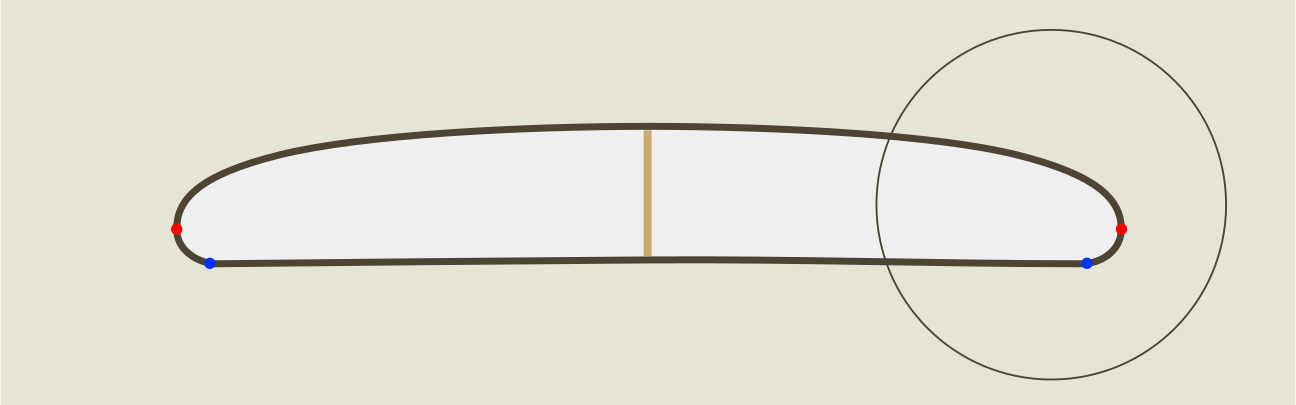
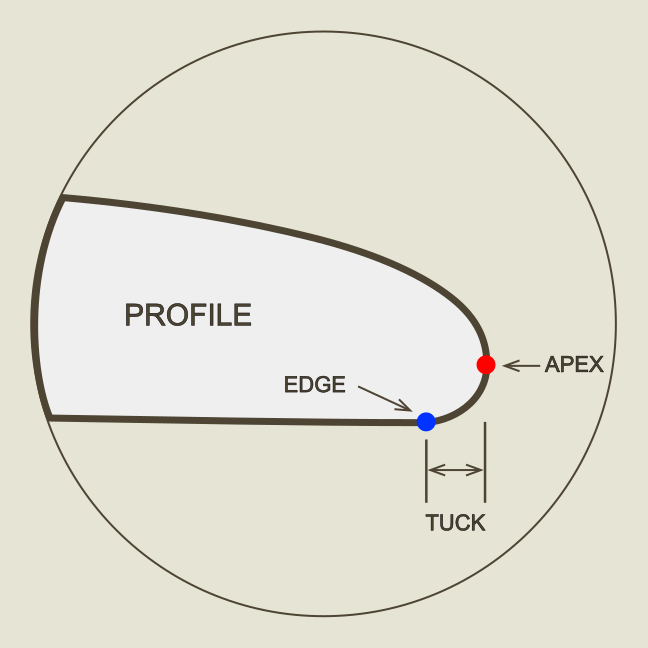
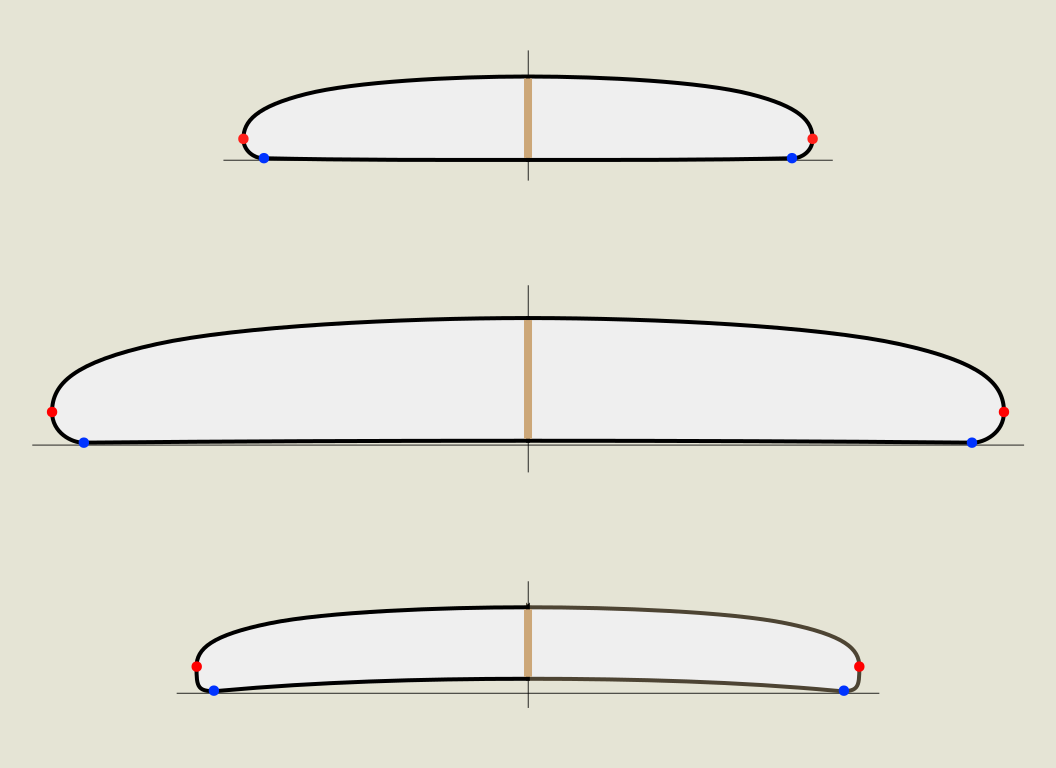
| Rail are configured of their profile, their apex, the mid point in the rail profile between the top and bottom of the board, and their tuck and edge, the bottom corner of the rail where the rail profile meets the bottom of the board. All features of a surfboard's rails are integrated to create a rail that best suits the purpose of the board's design.> |
| |
|
| |
 |
| |
|
| |
Full Rail Profile |
| |
|
| |
 |
| |
|
| |
Rail Profile Zoomed in with Configuration Features |
| |
|
|
When designing boards for a variety of conditions we can vary the
tuck and edge of the rail from the apex of the rail and from wide
point to tail to fine tune generating acceleration, projection,
speed, and maneuverability and control, the primary performance
features of a surfboard. The further we tuck the rail into the bottom
of the board the more the board will sit down in the water and
conversely, the less we tuck the rail into the bottom of the board
the more the board will sit on top of the water. The more a board and
rails sit down in the water the more control a surfer will have
performing maneuvers in critical waves and barrels. We refer to this
as "detuning" the rails. The less a board and rails sit down in the
water the more acceleration, projection, planning speed, and
maneuverability a board will have in small or marginal conditions. We
refer to this as "tuning" the rails. Basically we detune rails to
promote control in critical waves and barrels and tune rails to
promote performance in small and marginal waves.
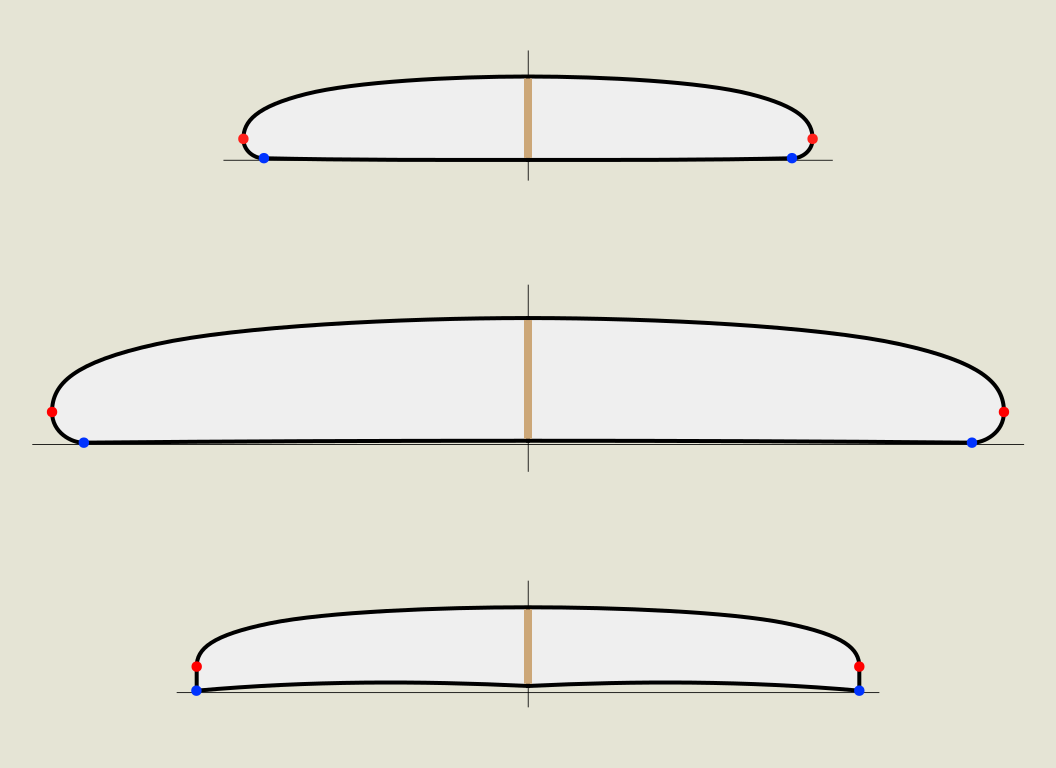
The length a hard edge or a machined edge carries from the tail towards the wide point has a similar affect to the tuck of the rail. The shorter this edge, where the edge blends to a soft tuck from the tail towards the wide point, the lower the board will sit in the water and the more control the board will offer the surfer performing maneuvers in solid waves and quality conditions. The further this edge carries towards the wide point the higher the board will sit on the water and the more acceleration, projection, and speed it will generate in small waves and marginal conditions. |
| |
|
| |
 |
| |
|
| |
TUNED RAIL with no tuck and maximum edge in the tail |
| |
 |
| |
|
| |
DETUNED RAIL with notable tuck and minimum edge in the tail |
| |
|
| |
The distance a rail is tucked from the apex of the rail and the
distance a rail has a hard edge from the tail towards the wide point
determines how a rail's performance varies. Less tuck and longer edge
offer more release. More tuck and shorter edge offer more control.
Ultimately, the tuck and edge of rails allows us to fine tune control and performance in all our designs maximizing performance features for waves and conditions. Boards for small waves and marginal conditions will benefit from less tuck and more edge. Boards for all around conditions will benefit from a reasonable blend of tuck and edge. Boards for critical waves, barrels, heavy water, and big waves will benefit from more tuck and less edge. |
| |
|
| |
LINK
Rail Anatomy 2012 & 2023 |
| |
< top of page > |