
|
|
|
| Home | | | Surfboards | | | Design | | | Surfing & Media | | | Surfcast | | | About NC | | | Custom Orders | | | Contact |
| |
|
| |
SURFBOARD FIN ANATOMY
HISTORY, CONFIGURATIONS, DESIGN COMPONENTS & FEATURES, FOILS & CONSTRUCTION FIN HISTORY Surfboard fins date to the mid 1930s. In 1935 Tom Blake attached the first known fin to a surfboard. After surfing with a fin or skeg as he referred to it for the first time Blake said, "When I first paddled out the board felt like it was much easier to keep in a straight line. I thought I might be imagining it. My first wave revealed the truth. Never before had I experienced such control and stability. It was remarkable the control you had over the board with this little skeg. I knew from that moment it was a success." The introduction of a fin on a surfboard changed surfing and surfboard design forever. In the 1950s innovative surfboard manufactures developed ever more functional solid fiberglass fins. In the 1960s Mike Hynson, Skip Frye, and Donald Takayama developed progressive longboard fins. In 1967 George Greenough introduced the high aspect ratio flex fin. In 1967 Tom Morey and in 1970 Bill Bahne designed and developed removable single fin systems. Credit to George Downing for creating an early removable fin box in 1951. In 1970 Steve Lis and Jeff Ching developed Twin Keel Fins for their Fish designs. In the mid 1970s Mark Richards and Reno Abellira developed Performance Twin Fins. In the 1980s Peter Ware and Glen Winton pioneered the first Quad configurations. Over the last 30 years Bill "Stretch" Riedel, Bruce McKee, and several other surfer shapers continued to develop the quad fin array. In 1981 Simon Anderson created the Thruster. In the 1990s FCS and Futures developed removable multi fin systems. In the 1990s fin manufacturers introduced RTM and G10 materials to fin construction. In the 1980s and 1990s Curtis Hesselgrave developed extremely progressive and performance enhancing foils including inside or vector foils. |
| |
|
| |
FIN CONFIGURATIONS |
| |
 |
| |
|
| |
SINGLE FINS Single fins were common to all surfboards with few exceptions from the first surfboards with fins to well into the shortboard revolution. Initially all single fins were "glassed on" until Tom Morey and Bill Bahne developed removable fin systems in the 60s. The removable fin systems featured "fin boxes" glassed into the bottom of boards to facilitate removable alternative designed fins and move fins forward and aft. Turns with a single fin can be pivotal or projection oriented depending on the fin's template and placement. Single fins are ideal for fast, down the line surfing. Well foiled single fins of various configurations and depth offer a predictable, controlled, and stable feel to longboards, mid lengths, and classic or contemporary single fin shortboards. |
| |
|
| |
 |
| |
|
| |
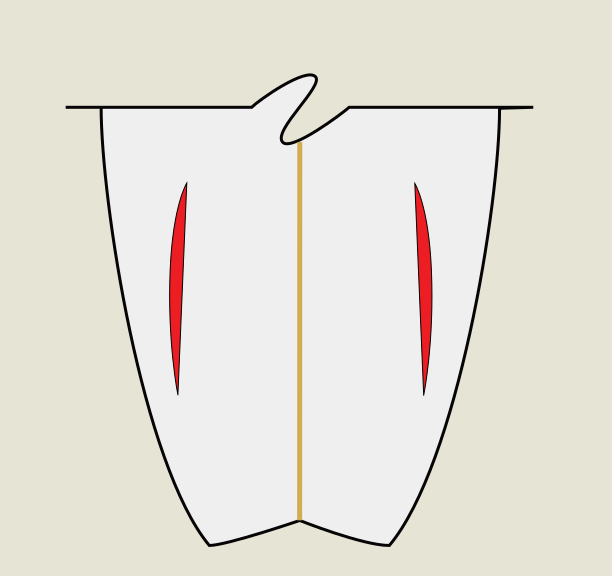
2 + 1 FINS The 2 + 1 fin configurations feature a glassed on or removable box single fin lined up in the center of a surfboard with two regular thruster rail fin boxes near both rails. Center fins feature a symmetrical foil. Center boxes are 8.5" or 10.5" long allowing the fin to to be set forward or aft to vary performance. The two rail fins or side bites feature flat or asymmetrical foils offering a board greater lift and control. The 2 + 1 is fin configuration is common to most contemporary longboard, mid length, and egg designs. |
| |
|
| |
 |
| |
|
| |
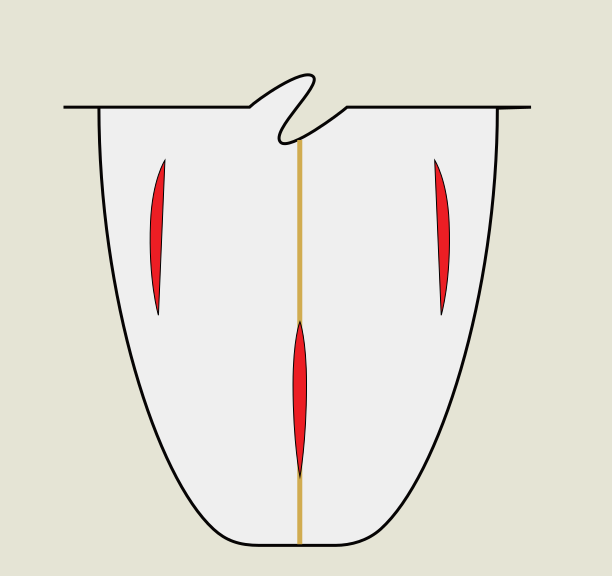
TWIN FINS Twin fins are a two fin configuration. They offer speed and maneuverability primarily from eliminating a center fin. Twin fins have more surface area, are deeper, and have a wider base than quad and thruster fins. The extra surface area is the driving force for this fin configuration. Twin fins can feature a flat, inside, or asymmetrical foil. The various foils provide nuanced variations in performance. Twin fins are most common to shortboards, particularly in smaller or moderate sized waves for their acceleration and speed, although they can be functional on all surfboard designs. |
| |
|
| |
 |
| |
|
| |
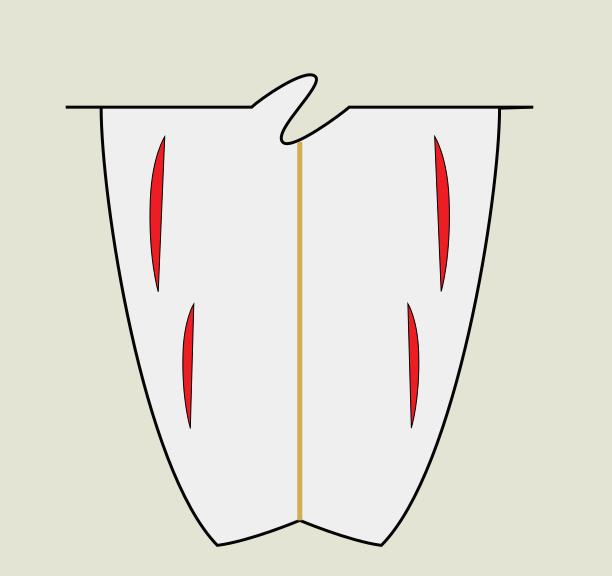
THRUSTERS The thruster fin configuration is the most common contemporary fin configuration. It is functional on nearly every class of surfboard. Thrusters combine the best performance features of single fins and twin fins. The front or rail fins are set angled near the center of the board at the nose. They typically feature a flat foiled inside surface to provide lift, acceleration, speed, projection, and maneuverability. The center fin features a symmetrical foil to offer stability and control. |
| |
|
| |
 |
| |
|
| |
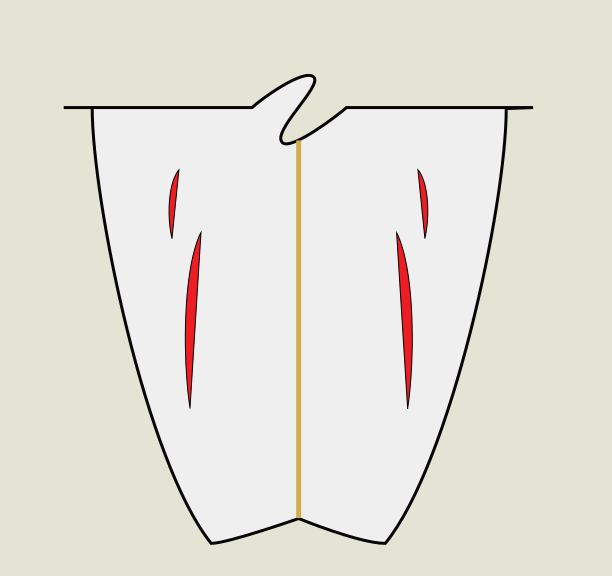
QUADS FINS Quad fin configurations offer acceleration, speed, and
maneuverability in all conditions. The two fins, the leading fin and the
trailing fin, configured near each other on each rail increase the surface area
and base of fin on rail offering additional power, projection, acceleration,
and speed. The absence of a center fin notably reduces drag. The leading fins
in a quad set are generally the same size as the rail fins in a thruster set
and feature a flat foil. The trailing fins commonly have about 80% the surface
area, depth, and base of the leading fins and feature either a flat or 80/20
foil. Quads fins are common to boards surfed in hollow barrels and fast down
the line waves on point, reef, and beach breaks. Quad fins are also very
functional in heavy water and XXL waves. Templates, dimensions, and foils vary.
For heavy water and XXL conditions quads feature 50/50, 60/40, and 80/20
symmetrical and asymmetrical foils.
REVERSE QUADS feature a smaller rail fin and a larger trailing fin. They are functional in all conditions and excel in heavy water and XXL waves. |
| |
|
| |
 |
| |
|
| |
TWINZERS The twinzer fin configuration features a twin fin and a fore fin referred to as a canard. The twin fin offers speed and maneuverability by eliminating a center fin. Twin fins are deeper, have a wider base, and have more surface area than quad and thruster fins. The extra surface area creates notable acceleration and projection. The twin fin in the twinzer configuration is positioned the same as on a pure twin fin dependent on the board's dimensions. The canard reduces turbulence, prevents cavitation and adds stability and control to twin fin designs. It is positioned in front, is offset to the side, and very slightly overlaps the leading edge of the twin fin. |
| |
|
| |
 |
| |
 |
| |
|
| |
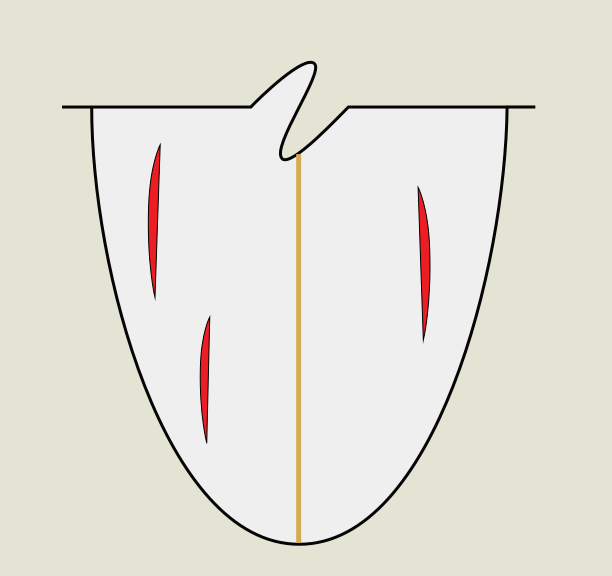
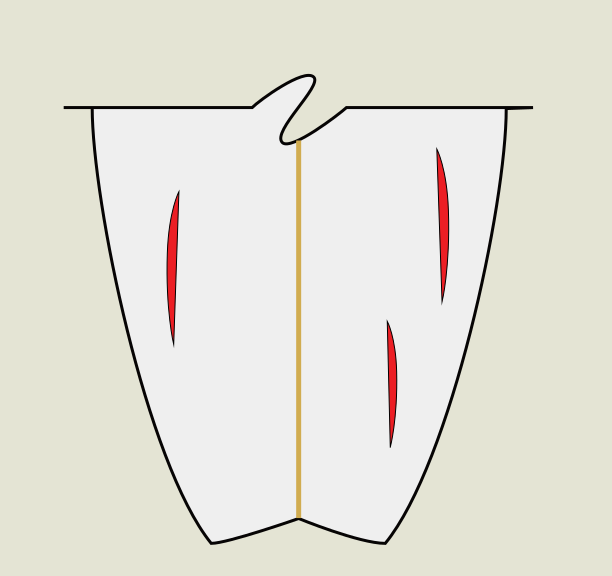
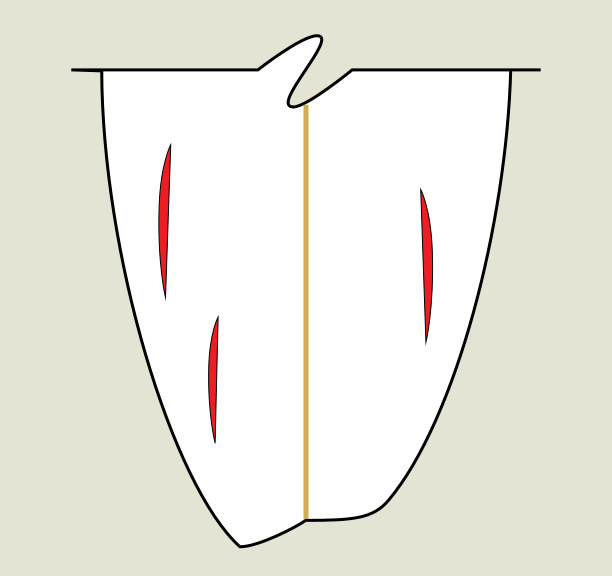
ASYMMETRICAL Asymmetrical fin designs can feature many designs, layouts and configurations. They can feature combinations of single fins, twin fins, thrusters and quads. This image illustrates quads on one rail and twin or thruster or quad without a trailer on the other rail. The positioning and juxtaposition of the fins can be varied for performance features. The rail with the quads offers maximum power, projection and acceleration. The rail with twin or thruster or quad without trailer offers maximum pivotal maneuverability. This rail and fin layout offers a wide range of horizontal and vertical angles out of turns. Creative and imaginative combinations can be designed for venues, toe side and heel side turns, and surfer preferences. |
| |
|
| |
COMPONENTS & FEATURES of FIN DESIGN |
| |
|
| |
 |
| |
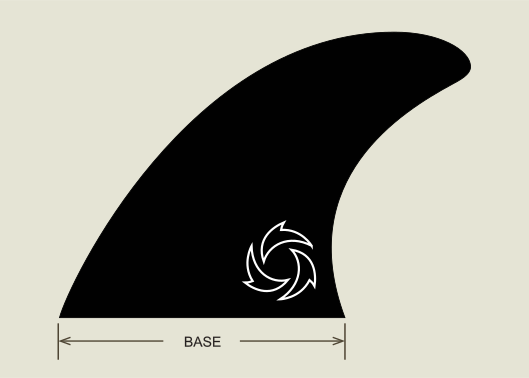
BASE The base is the length of the bottom of the fin where it is attached to a board. A longer base offers more lift and projection. A shorter base offers less lift and more maneuverability. |
| |
|
| |
 |
| |
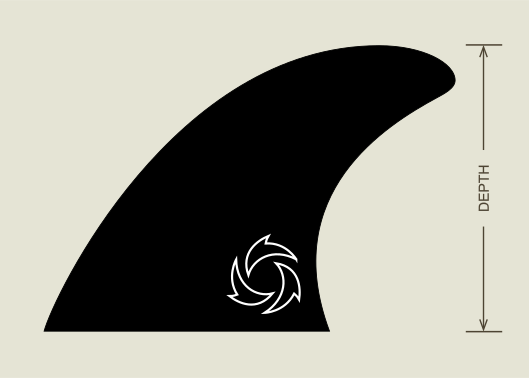
DEPTH The depth of a fin is the length of the fin from base to tip in a straight vertical line. Deeper fins offer more holding power - shallower fins less. Deeper fins provide longer turns and more projection - shallower fins provide a tighter turning radius and more maneuverability. |
| |
|
| |
 |
| |
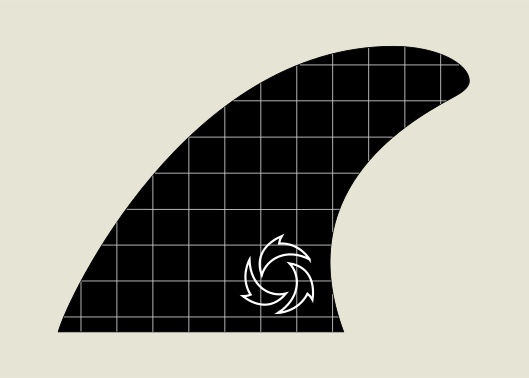
SURFACE AREA The surface area of a fin is a product of the geometry of a fin's template. It is the area of the surface of a fin. Surface area is a square measurement. A fin with more surface area will have more holding power and more projection. A fin with less surface area will have less holding power and less projection. Of note, more surface area increases drag and less surface area reduces drag. |
| |
|
| |
 |
| |
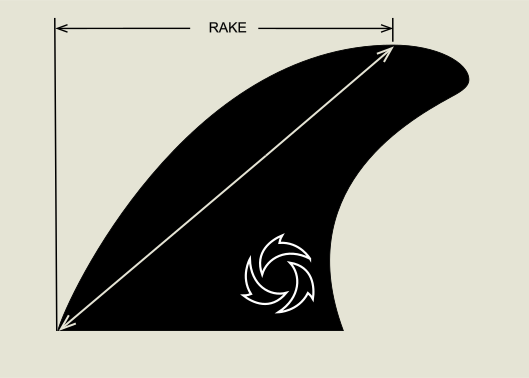
RAKE Rake references the relative position of the tip of the fin to the base of the fin. A fin with more rake has the tip of the fin further aft relative to the base. A fin with less rake has the tip of the fin less aft relative to the base. More rake promotes more projection from turns. Less rake promotes more pivotal turns. |
| |
|
| |
 |
| |
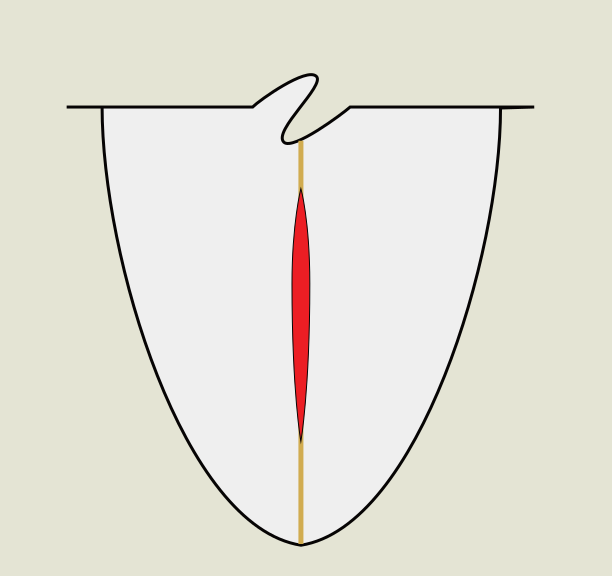
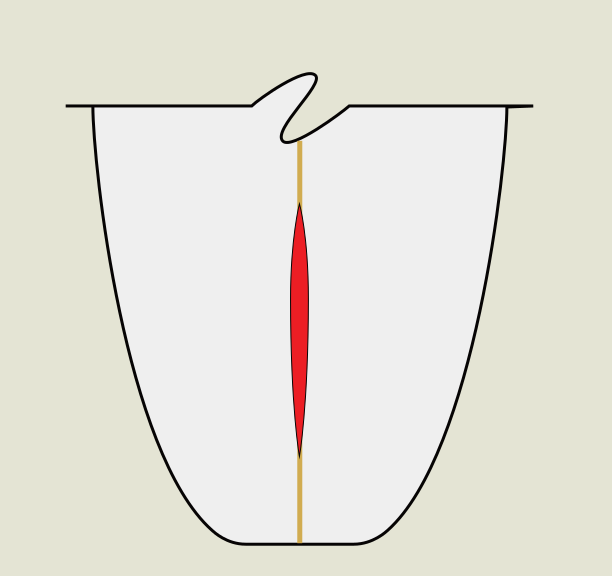
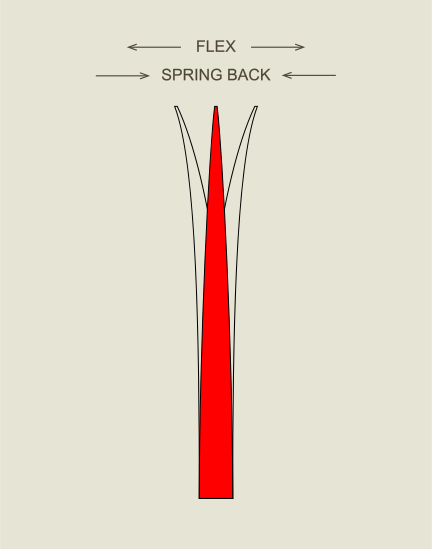
FLEX Fin flex and spring back is the degree that a fin flexes or bends side to side and springs back to it's neutral centered position when on rail or turning a board. The degree that a fin flexes and springs back are determined by the foil, dimensions, and thickness of the fin and the surfer's technique. A well foiled fin will flex and spring back predictably and consistently providing surfer and board optimum performance. A thicker foil will generally have a stiffer flex pattern and quicker spring back. A thinner foil will have a softer flex pattern and slower spring back. A heavy footed surfer will generate more flex when on rail or turning a board. A light footed surfer will generate less flex. Flex and spring back function to help accelerate a board when engaging the rails and out of turns. Stiffer flex and spring back generate more acceleration and speed and great control in quality surf. Softer flex will generate acceleration and speed as well and can help generate those performance features in marginal surf. Flex that is too stiff won't offer much acceleration. Flex that is too soft offers no acceleration. |
| |
|
| |
FIN PLACEMENT FEATURES |
| |
|
| |
 |
| |
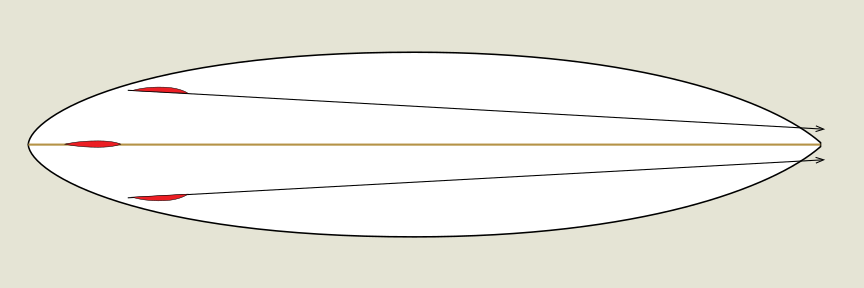
TOE The toe of a fin set up is the angle that the rail fins are pointed towards the stringer or center of the board at the nose. Fins set more parallel to the stringer will offer longer radius turns and more projection. Fins set angled closer to the center of the board at the nose offer tighter turning radius and more maneuverability. Shapers can set the toe of fins with measurements at the leading and trailing edge of the fins relative to the stringer or center line of a board. Alternatively, toe can be set with a lengthy straight edge aligned with the position of the fin's trailing edge at its base and a position relative to the center of the nose of the board. |
| |
|
| |
 |
| |
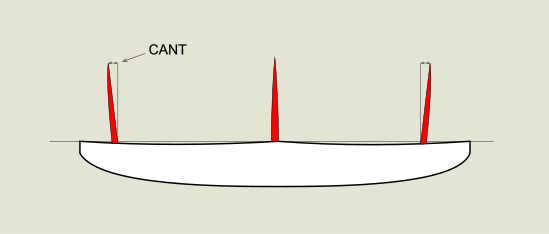
CANT Cant is the degree of outward angle a rail fin is set in relation to the horizontal plane of the bottom of a board. Cant is measured in degrees. A fin set with more cant will offer less projection but more maneuverability. Conversely, a fin set with less cant will offer more projection and less maneuverability. A cant of 6.5 degrees off a board's horizontal plane is common and offers a nuanced balance of projection and maneuverability. |
| |
|
| |
FIN FOILS
FOILS Surfboard fin foils are the shape and geometry of both sides of fins. Both sides of single fins and center fins in thruster configurations and the inside and outside surfaces of rail fins for twin fins, quads, thruster, and 2 x 1 configurations all have nuanced foils best suited for their design. Foils determine how water moves over the surface of fins. Foil configurations and geometry affect lift and drag and ultimately can be designed to yield particular and relevant performance features for fins. A functional and efficient fin will have different design features for different surfboard designs, surfers, and waves. Certain fin configurations and foils are ideal for small and moderate surf, marginal and clean conditions, bigger surf, or XXL surf. Some configurations and foils are universal and span several if not all designs, surfers, waves, and conditions. |
| |
|
| |
 |
| |
|
| |
FIN FOIL CLASSES |
| |
|
| |
 |
| |
|
| |
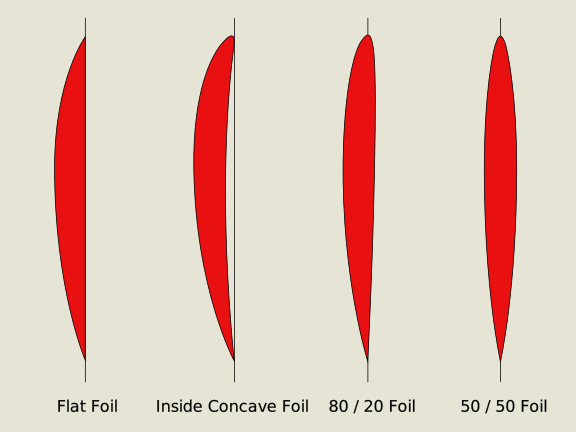
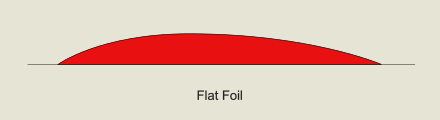
FLAT FOILS A flat foil features a flat inside surface and a convex outside surface. As a board moves through the water the flat inside surface is the high pressure side of the fin and the convex outside surface is the low pressure side of the fin. With the forward movement of a board through water the fins create lift providing the board with acceleration and speed. This performance feature distinctly separates boards with rail fins - twin fins, quads, and thrusters, from the neutral feeling of a single fin. The 2 x 1 fin configuration adds an element (feature) of lift and extra acceleration and speed to a single fin. A flat foil offers a balanced combination of projection, release and control across a wide spectrum of surfboards, surfers, waves, and conditions. The performance, stability, consistency, predictability, and reliability of flat foils make them the most common foil for twin fins, quads, and thrusters |
| |
|
| |
 |
| |
|
| |
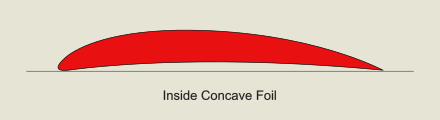
INSIDE FOILS An inside or concave foil features a concave inside surface and a convex outside surface. Inside foils are also know as "Vector" foils. The leading edge has a neutral asymmetrical foil. A concave surface over the same template will have more surface area than a flat foil. (Simple geometry.) The extra surface of an inside foil offers more lift. The extra lift is an asset in smaller, slower, flat faced waves at slower speeds. In better waves the extra surface area has more drag and can slow a board down particularly between turns. |
| |
|
| |
 |
| |
|
| |
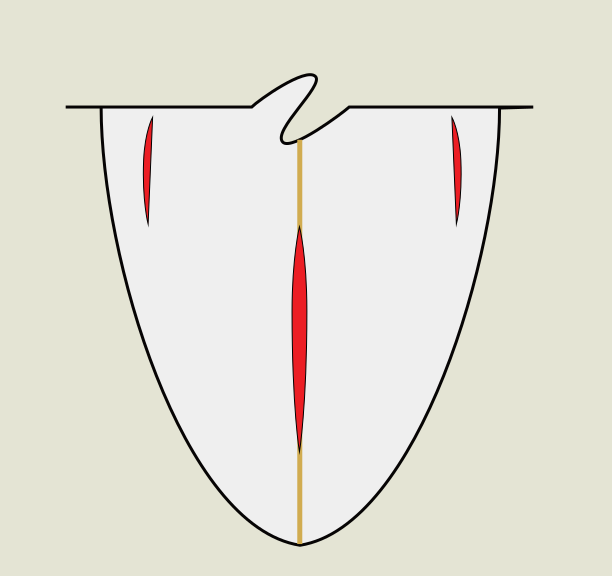
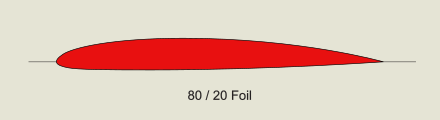
ASYMMETRICAL 80 / 20 FOILS An asymmetrical foil features the combined performance of a flatter high pressure inside surface and a symmetrical low pressure outside surface. This foil provides the lift and acceleration from the inside or high pressure side of the fin and the stability and the control of a convex symmetrical foil from the outside or low pressure side of the fin. The leading edge has a neutral asymmetrical foil. An 80 / 20 foil is common to trailers in quad configurations. This foil is also an intriguing option for twin fins. |
| |
|
| |
 |
| |
|
| |
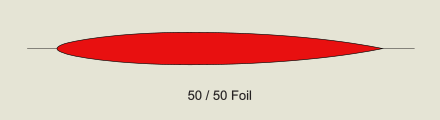
SYMMETRICAL 50 / 50 FOILS A symmetrical or 50 / 50 foil is used on all single fins and center fins. Both sides have a convex surface. Water flows equally on both sides creating a neutral, stable and controlled fin. A symmetrical foil is often used in quad trailers in quality or XXL waves for control and release in critical surfing. |
| |
|
| |
FIN CONSTRUCTION & MATERIALS
G10 FINS G10 fins are made with a high strength epoxy and fiberglass material called G10. G10 material is made by compressing multiple layers of fiberglass and epoxy resin under heat and pressure. G10 fins are stronger and lighter than solid fiberglass and can be foiled thinner. Their flex pattern has solid and quick spring back providing extra projection and excellent release through turns or going rail to rail speeding down the line. SOLID FIBERGLASS FGINS Solid fiberglass fins offer everything required for correct fin performance. They offer the fundamental performance features of acceleration, speed, projection, and maneuverability as well as firmly holding and releasing rail and fin. Solid fiberglass fins perform across the full spectrum of surfboard designs, surfers, and conditions. This material offers control and stability for powerful surfing in all conditions. They are built from solid fiberglass panels. Templates and foils will vary for designs and conditions. Solid fiberglass fins can have a consistent strong flex pattern and spring back with a thicker foil and a consistent softer flex and spring back with a thinner foil. The thicker stronger flex and spring back foil is well suited for and performs very well in powerful, quality, and bigger waves. The thinner softer flex and spring back foil performs well in less powerful, marginal, and smaller waves. RTM FINS RTM or Resin Transfer Molded fins are made of fiberglass, polyester resin, and a hexcore honeycomb core. This material combination is designed to offer similar performance to solid fiberglass fins with less weight. Strategically placed fiberglass and carbon fiber reinforcements maintain a functional flex and spring back. RTM fins are the most flexible of common fin materials. The extra flex and softer spring back make an RTM fin an option in marginal conditions and moderate waves when the extra flex can add spring and acceleration to turns. |
| |
|
| |
LINKS to FIN TECHNOLOGY & FIN MANUFACTURERS
NVS G10 Fins NVS Fin Guide - Fin Technology Futures Fins Futures Fins - Finology True Ames Fins True Ames Fin Guide - Fin Technology |
| |
< top of page > |