
|
|
|
| Home | | | Surfboards | | | Design | | | Surfing & Media | | | Surfcast | | | About NC | | | Custom Orders | | | Contact |
| |
|
| |
FIN DESIGNS, LAYOUTS & PERFORMANCE |
| |
|
| |
Fin configurations and fin performance vary by surfboard classes
and designs and by the fin's designs and their placement. Some fin
configurations are completely unique to some surfboard designs, yet
most will function and perform well with any design.
The primary fin configurations are single fins, 2 + 1s, twin fins, thrusters, and quads. Single fins and 2 + 1s are common to most longboard and mid length designs. Twin fins, thrusters, and quads are also employed on those designs with excellent results. However, twin fins, thrusters, and quads are most common to shortboards, semi guns, and XXL guns. Twin fins are the primary and preferred fins for Fish designs. Here is a comprehensive anatomy of fins. Contemporary and historical surfboard classes and surfboard designs and multiple fin configuration options offer surfers a vast spectrum of performance features not only from each configuration, but also by nuanced fin templates, dimensions, foils, placement, and juxtaposition to each other. Here is a brief description of various fin foils. |
| |
|
| |
FIN DESIGNS |
| |
|
| |
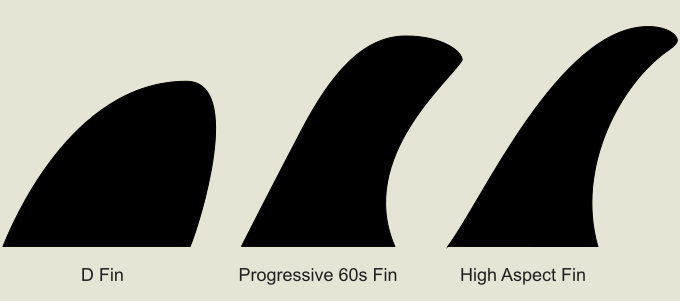
LONGBOARD SINGLE FINS Single Fins have been around as long as there has been fins on surfboards. They were the staple of the classic post World War II longboards. In the 1960s LB Single Fins evolved from nearly square D fins to life form Progressive fins to High Aspect flex fins. |
| |
 |
| |
|
| |
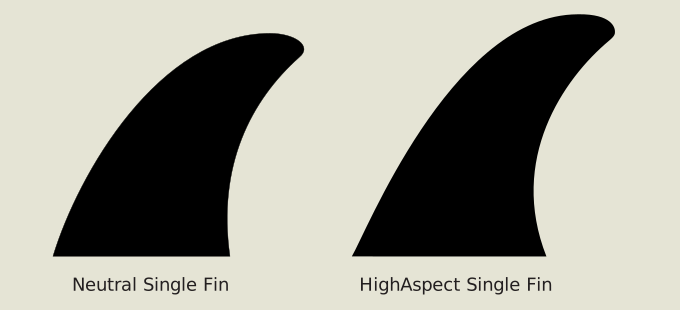
SHORTBOARD SINGLE FINS Single Fins were the primary fin configuration for shortboards at the beginning of the shortboard revolution in 1966 - 67. Neutral and High Aspect templates were common. Neutral fins were more pivotal. High Aspect fins had more flex and offered more acceleration, projection, and speed. |
| |
 |
| |
|
| |
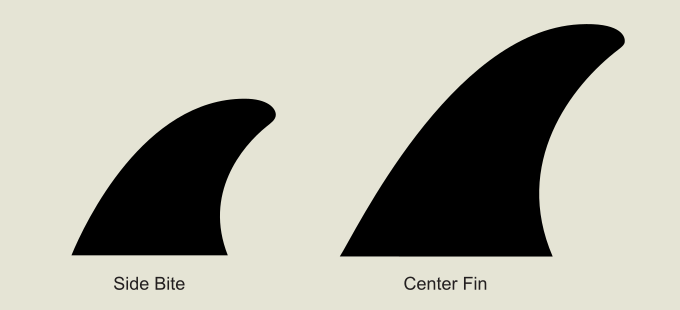
2 + 1 FINS 2 + 1 fins were introduced to early single fin shortboard designs to promote greater control and maneuverability. In the 1980s the 2 + 1 configuration was applied to emerging contemporary longboard and mid length designs. |
| |
 |
| |
|
| |
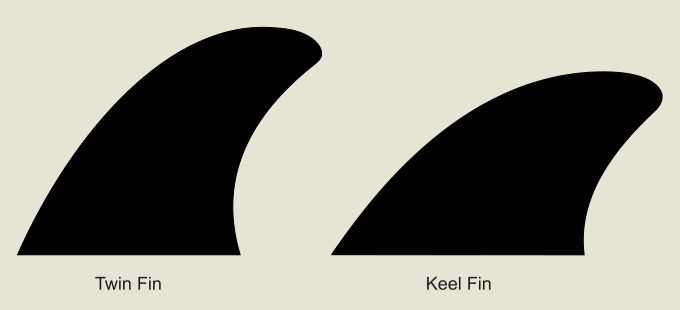
TWIN FINS Although Twin Fins date to Bob Simmons in the 1940s and were used quite functionally by brothers Nick and Bear Mirandon from La Jolla in the mid 1960s the configuration gained traction in the mid 1970s when surfed to great affect by Hawaiian Reno Abellira and Australian Mark Richards. Fish designs pioneered by Steve Lis and Jeff Ching featured Twin Keel Fins. |
| |
 |
| |
|
| |
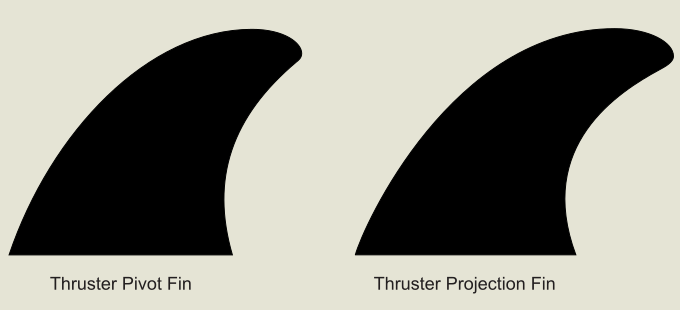
THRUSTERS The Thruster Fin configuration was pioneered by Australian Simon Anderson in 1981. The design offers superior control, stability, and predictability combining the acceleration, speed, and maneuverability of twin fins and single fins. The thruster configuration has been the primary fin configuration for decades. |
| |
 |
| |
|
| |
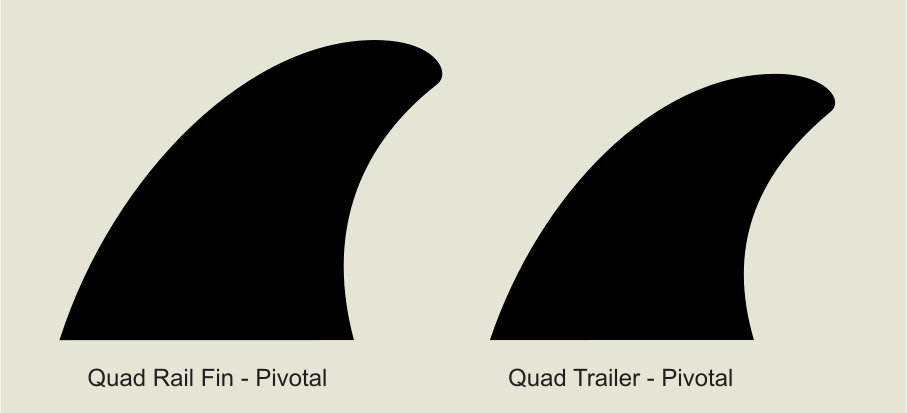
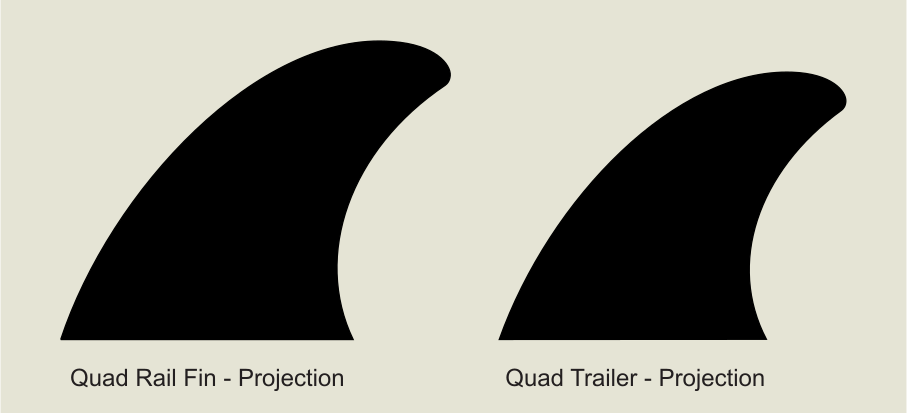
QUADS The Quad Fin configuration was introduced by Australian Glen Winton in 1982. The design is an adaptation and extension of the twin fin concept that reduces drag and increases acceleration and speed by eliminating the center fin. The primary quad configuration features a thruster like forward fin and a moderately smaller trailing fin. An evolving quad option, the Reverse Quad, features a larger trailing fin. This configuration is particularly efficient in heavy water and XXL conditions minimizing drag, eliminating cavitation, and maximizing control. |
| |
 |
| |
 |
| |
|
| |
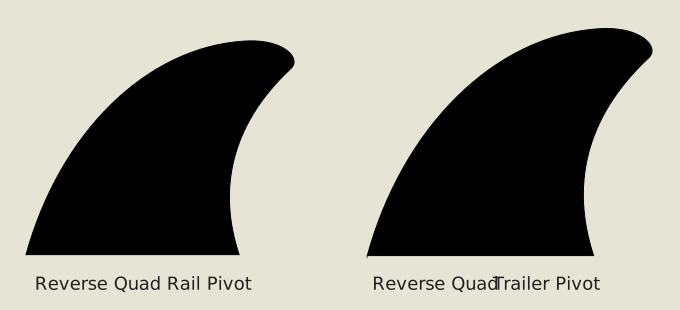
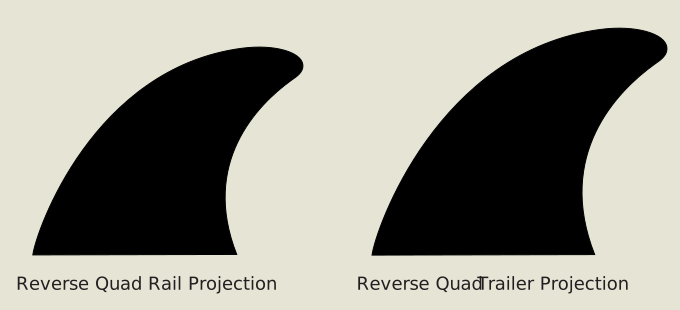
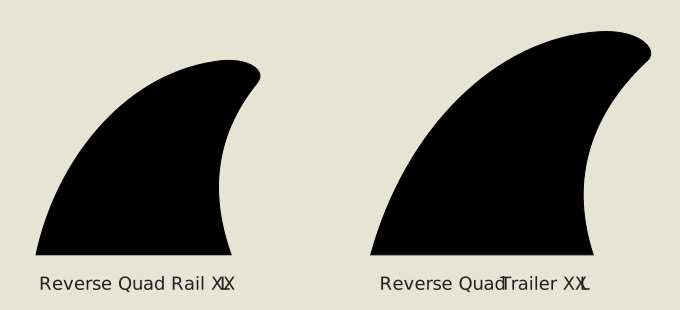
REVERSE QUADS An evolving quad option features a smaller forward rail fin and a larger trailing fin. Reverse quads are functional, effective, and efficient in all conditions. They particularly efficient in heavy water and XXL conditions minimizing drag, eliminating cavitation, and maximizing control. Templates may be pivotal or projection oriented, or a combination of pivotal and projection orientation. The dimensions, surface area, and foils for heavy water and XXL conditions are designed to maximize acceleration, speed, control, and predictability. Reverse quads are are a creative fin design equally functional and efficient for all waves and conditions. |
| |
 |
| |
 |
| |
 |
| |
|
| |
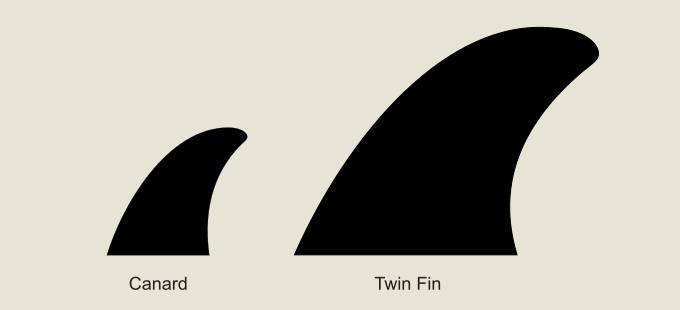
TWINZERS An often forgotten fin configuration is the Twinzer featuring a small fore fin referred to as a "canard" in front of a typical twin fin. The canard reduces turbulence, prevents cavitation, and adds stability and control to twin fin designs. The canards are generally 3" to 3 1/2" deep and the primary twin fins generally 5" to 5 1/2" deep. |
| |
 |
| |
|
| |
FIN LAYOUTS, PLACEMENT & PERFORMANCE |
| |
|
| |
LONGBOARD SINGLE FINS Single fins are pivotal by nature. The
absence of 2 + 1 side bites, twin fin, thruster, quad, or any rail
fin creates a single pivot point to turn a board from rail to rail.
Single fins create smooth arching down the line turns and are most
efficient when surfer, board, and wave are in sync with each other.
They were historically and currently the primary fin configuration
for classic LBs offering pivotal turns, stability and control in trim
and on the nose. LB single fins evolved from the D fin of the early
1950s and early 1960s featuring a nearly rectangular template to
Progressive fins designed for turns, trim, and nose riding in the
early to mid 1960s to the High Aspect Flex fins pioneered by George
Greenough in the mid 1960s. The D fins offered excellent stability
for trim and nose riding, however they were difficult to turn. The
Progressive fins offered the same stability in trim and on the nose
and introduced significant maneuverability. The High Aspect flex fins
were also equally efficient in trim and on the nose, but offered
substantially greater acceleration, projection, and maneuverability
and ultimately became the fin of choice for traditional classic
longboarding.
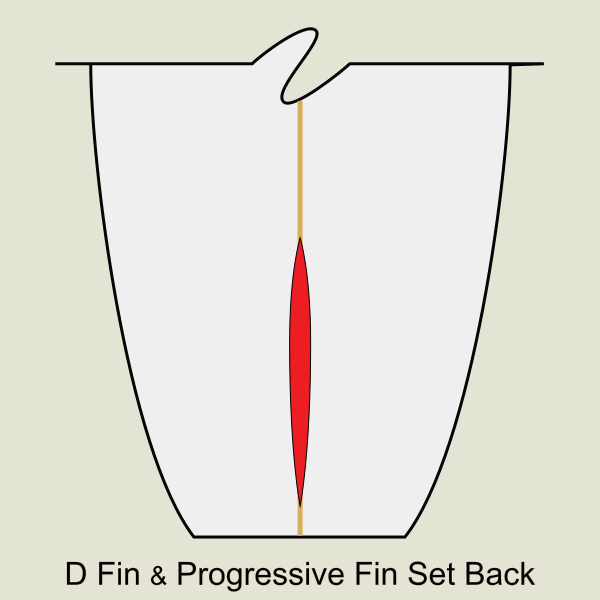
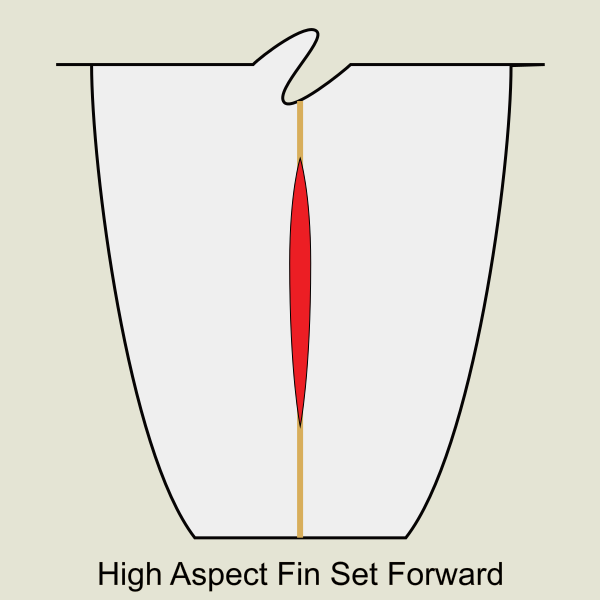
Single fin size and placement affect performance. D fins have equally long base and depth dimensions featuring a 9" to 10" base and are 9" to 10" deep. Without exception the trailing edge is placed very near the tail of a board. D fins best feature is stability in trim and on the nose. Progressive fins feature a moderate 7" to 8" base and a deep 9" to 10" full profile. Progressive fins are placed near the tail like D fins. They offer the same stability in trim and on the nose with greater maneuverability. High Aspect fins also feature a moderate 6" to 7" base, a deep 9" to 10" or deeper profile, and a flexible foil from base to tip. The solid base offers control in trim and on the nose and the flexible high aspect foil facilitates fluid rail to rail transitions and power and projection out of turns. High Aspect flex fins may be placed forward and aft to vary performance. Generally, further forward creates a more drawn out turn and further aft a more pivotal turn. |
| |
 |
| |
|
| |
These images illustrate LB Single Fin placement. D fins and Progressive 60s fins are placed within an inch or two of the tail. High Aspect fins are placed approximately the length of the base or length of base plus a few inches from the tail. Placed further back High Aspect single fins will have a tighter turning radius. Placed further forward they will have more projection. |
| |
|
| |
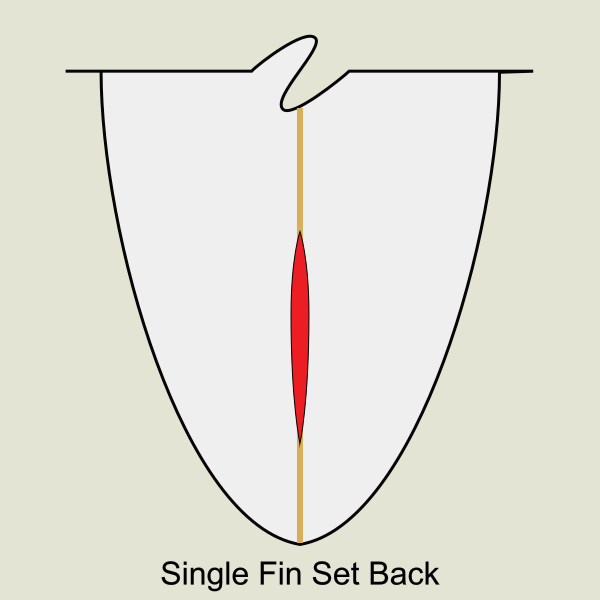
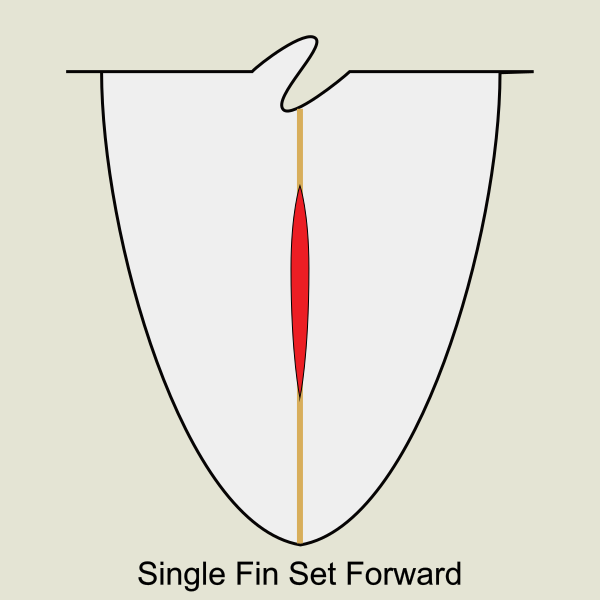
SHORTBOARD SINGLE FINS Single Fins were also the original fin configuration for surfboards at the beginning of the shortboard revolution offering the same performance features as they did for classic longboards. Shortboard single fins featured Neutral and High Aspect templates and foils. Neutral fins were more pivotal. High Aspect fins evolved from Greenough's flex fins. They offered more acceleration, projection, and speed. Shortboard single fin templates resemble life form fins common to sea mammals and fish, such as dolphins, whales, and tuna. Common shortboard single fin dimensions are 5" base and 8" deep. Single fins remained common during the first decade of the shortboard revolution, but the evolution of surfing and surfboard design saw most surfers transition to 2 + 1s, twin fins, and ultimately thrusters and quads. |
| |
 |
| |
|
| |
These images illustrate shortboard Single Fin placement. Single fins are pivotal by nature whether neutral or raked. Neutral templates are more pivotal than raked templates. Placed further back single fins will have a tighter turning radius. Placed further forward single fins will have more projection. |
| |
|
| |
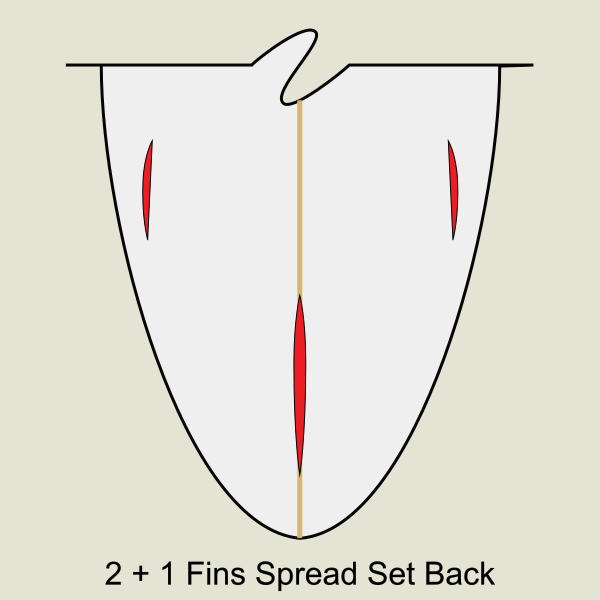
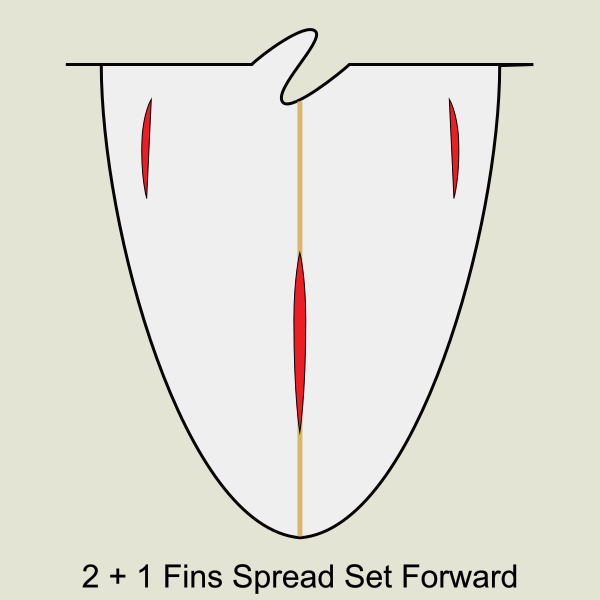
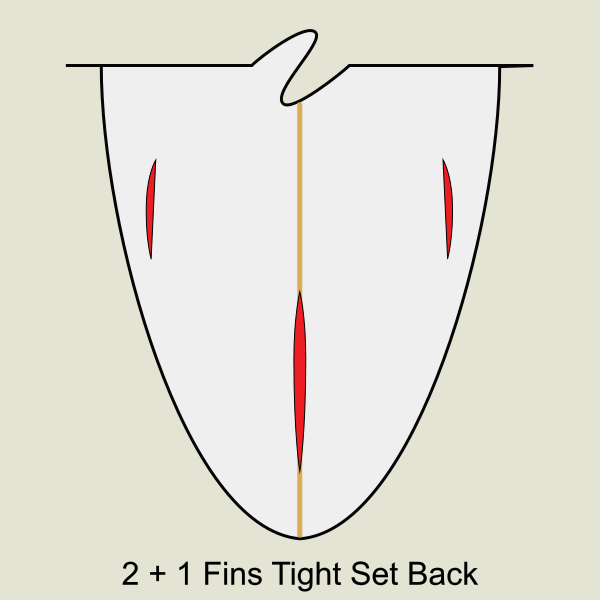
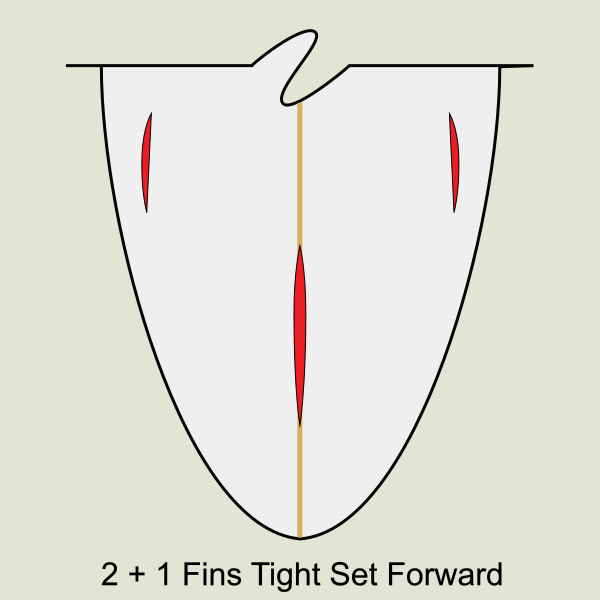
2 + 1 FINS 2 + 1 fin configurations perform very much like single fins coupled with features of thrusters. The side bites offer substantial performance features. They offer more control, hold trim better in steep and critical waves, and provide greater projection and acceleration out of turns. The additional surface area of this configuration compared to a single fin allows shapers and surfers, if they chose, to use a smaller center fin as the rail bites provide or make up for the reduced size of the center fin with their surface area. This provides more acceleration and speed, better rail to rail transitions, and more maneuverability. The juxtaposition of the center fin and rail bites and the placement of the configuration also affect performance. The closer the trailing edge of the side bites to the leading edge of the center fin the more pivotal the board will turn. Separated further, the more down the line the board will turn. Additionally, the same configurations placed closer to the tail will be more pivotal and placed further forward from the tail will offer a longer arc and more projection. The combinations are nearly limitless and offer nuanced performance variations. |
| |
 |
| |
 |
| |
|
| |
These images illustrate 2 + 1 fin placements. 2 + 1 fin sets can be clustered tight or spread further apart. Clustered tight they will be more pivotal. Spread further apart they will have more projection. Placed further back 2 + 1 fins will have a tighter turning radius. Placed further forward 2 + 1 fins will have more projection. |
| |
|
| |
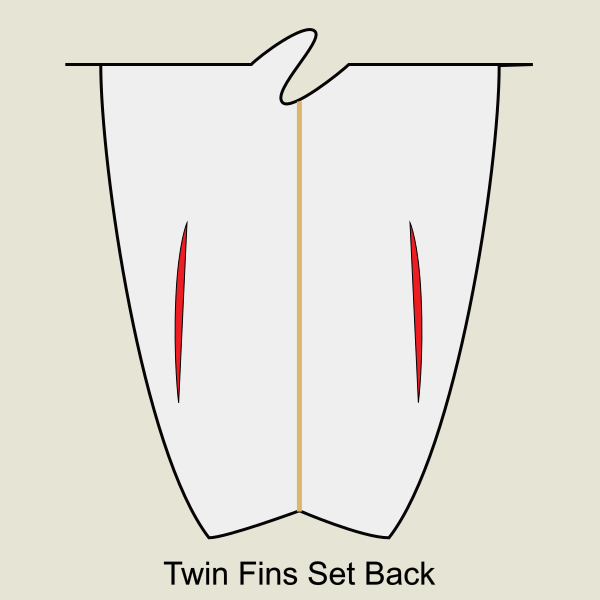
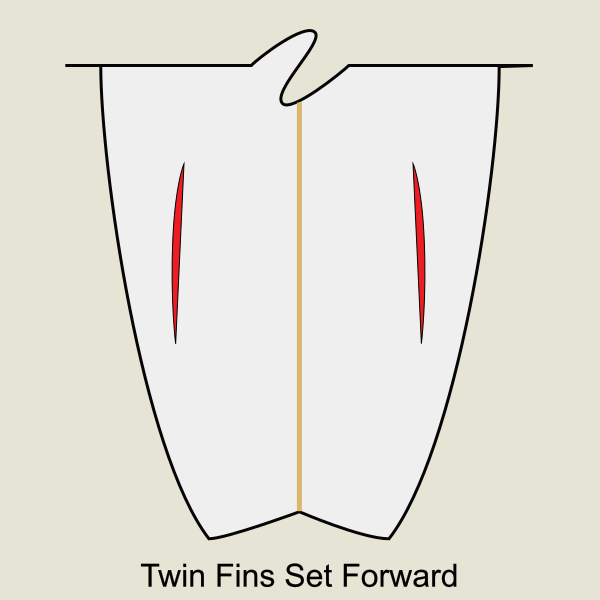
TWIN FINS Twin fins are fast and loose. They are functional on a variety of surfboard classes and designs from shortboards to mid lengths to LBs to XXL Guns, and are uniquely suited to Fish designs. Twin fins are fast and loose because there is no center fin in their configuration reducing drag and amplifying maneuverability. Positioned near the rails, twin fins create more lift than single fins and naturally and organically transfer energy into rails. Twin fins are fast down the line, loose rail to rail, and can create a variety of tight and projected turns. Twin fin templates are similar to thruster and quad templates. Fins with less rake are pivotal by design and fins with more rake project by design. Common twin fin dimensions are larger than thrusters and quads featuring 4 5/8" to 4 7/8" bases and are 5 1/4" to 5 1/2" deep. Of note, Fish designs are a twin fin design and can feature common twin fin templates as well as keel type twin fins. Keel fins are generally 5" to 5 1/4" deep with a 7 1/4" to 7 3/4" base. Fin placement depends on the overall length and the tail width of a board. Generally, further aft will yield more pivotal turns and further forward will yield more projection out of turns. Twin fins offer excellent acceleration, projection, speed, and maneuverability. |
| |
 |
| |
|
| |
These images illustrate Twin Fin placement. Twin fins are fast and loose. Placed further back twin fins will have a tighter turning radius. Placed further forward twin fins will have more projection. |
| |
|
| |
THRUSTERS Thruster configurations are three equal size fins
working together to provide a board with exceptional performance
features. They offer acceleration, speed, maneuverability, control,
and stability. Twin fins were the forerunner and set the stage for
thrusters. Their powerful rail fins offered acceleration, speed, and
tight radius turns. Twin fin rails and fins combined in a manner that
performed radically different than single fins and 2 + 1s fins.
Thrusters combine the powerful arcs of twin fins with a center fin
offering greater stability, control, and predictability to a board's
performance.
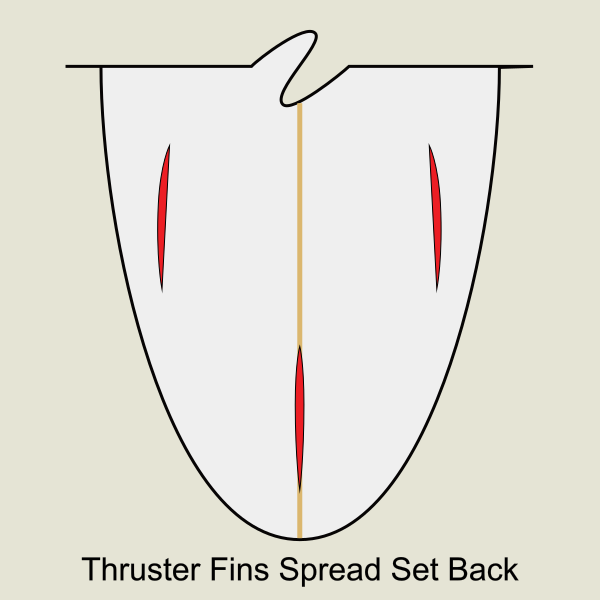
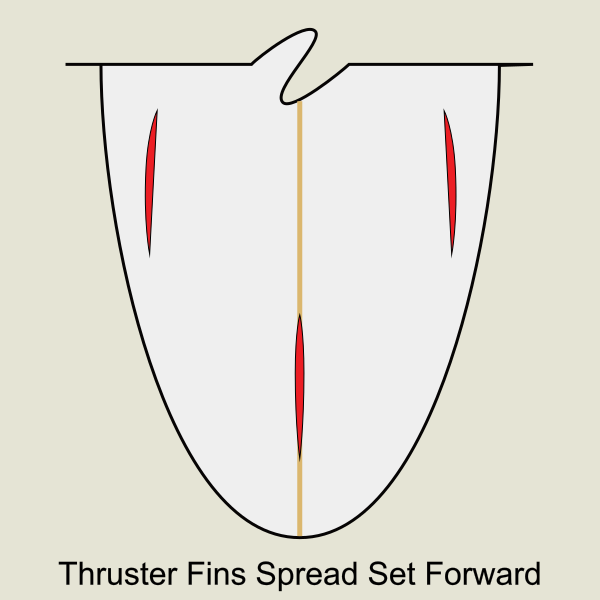
Thruster fin designs vary by templates, dimensions, and foils. Templates vary primarily by surface area and rake. Fins with less rake will be more pivotal or neutral. A fin with more rake will offer more projection. Thruster fins for boards with wider and thicker tails can be deeper and have more surface area to maintain control and stability. Thruster fins for boards with narrower and thinner tails can be shallower with less surface area as less fin is required for control and stability. All fins cause drag. Drag slows any object down. Keeping fin dimensions to a minimum keeps drag in surfboard performance to a minimum. The rail fins and center fin in many thruster sets are the same size, although many thruster sets feature a slightly smaller center fin. The smaller center fin loosens the board without compromising stability and control. Common thruster fins have a 4 3/8" base and are 4 1/2" to 4 5/8" deep. Foils are primarily flat foil for rail fins and symmetrical 50/50 foil on the center fin. Another rail fin foil option is an inside foils or vector foil – a nuanced concave foil on the inside surface of the rail fins. |
| |
 |
| |
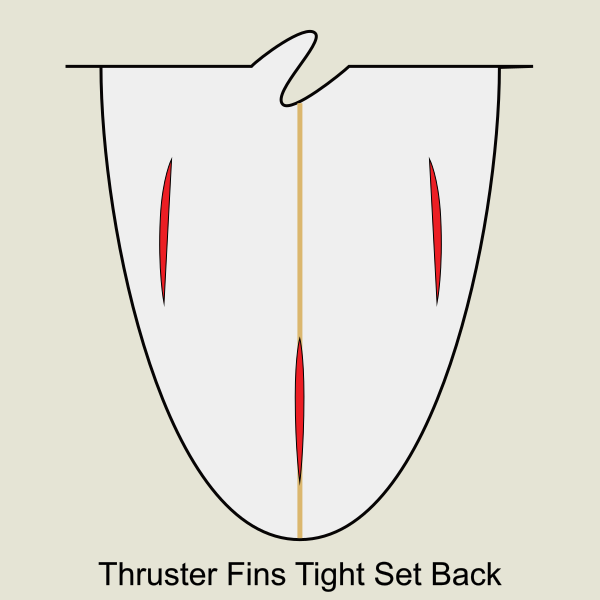
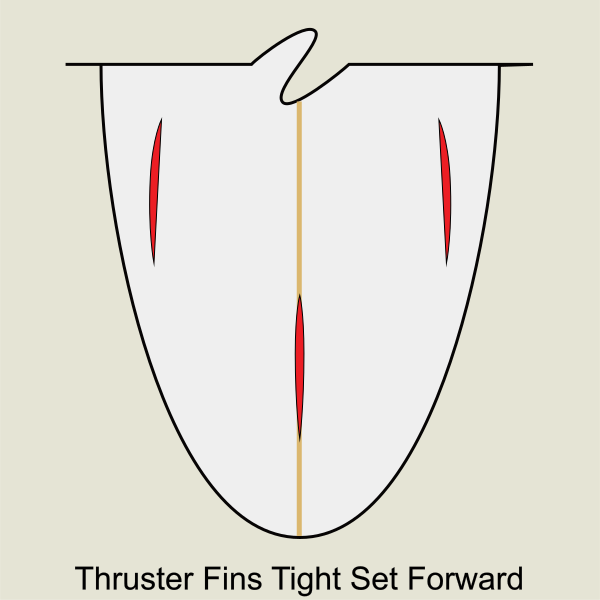 |
| |
|
| |
These images illustrate Thruster fin placements. Thrusters can be clustered tight or spread further apart. Clustered tight they will be more pivotal. Spread further apart they will have more projection. Placed further back thrusters will have a tighter turning radius. Placed further forward thrusters will have more projection. |
| |
|
| |
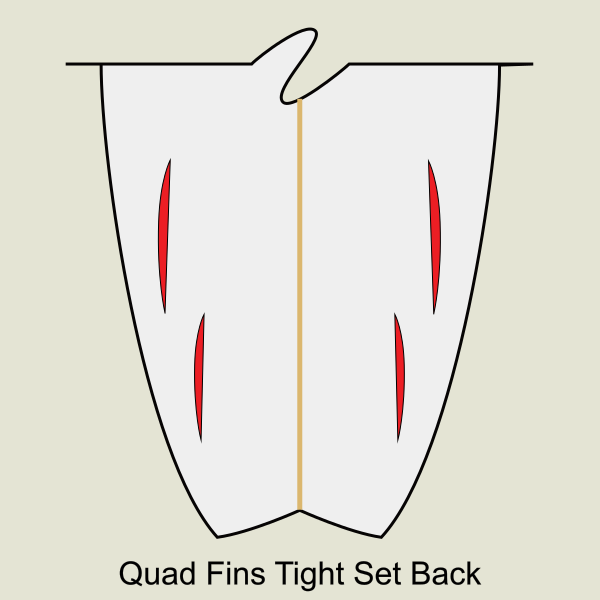
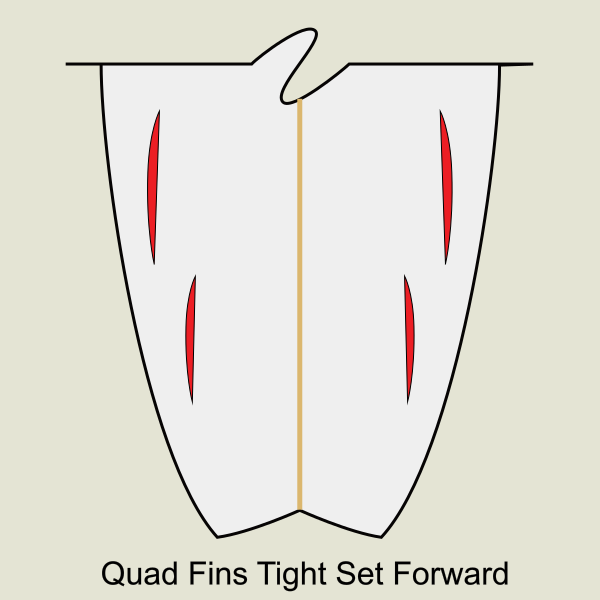
QUADS Quad configurations feature forward rail fins and trailing rail fins. The forward fins are nearly the same as thruster rail fins. The trailers are slightly smaller. Templates may be neutral, pivotal, or projection oriented. Common forward fins have a 4 1/2" base and are 4 1/2" to 4 5/8" deep. Common trailing fins have a 4" base and are 4" deep. Forward fin foils are primarily flat foils. Trailers may be flat sided foils for more lift, acceleration, and speed or 80/20 foils for less drag and more control and stability. Quads are very responsive and accelerate quickly with minimum effort. They excel in small fun surf, fast down the line surf, critically steep and hollow surf, and XXL surf due to their combined bases near the rail and their exceptional speed. They perform exceptionally well in critical take offs, on rail, and have speed to burn in barreling sections. |
| |
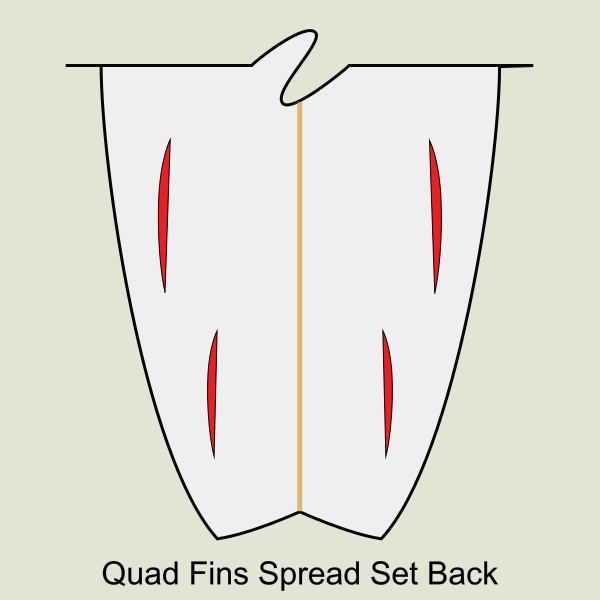
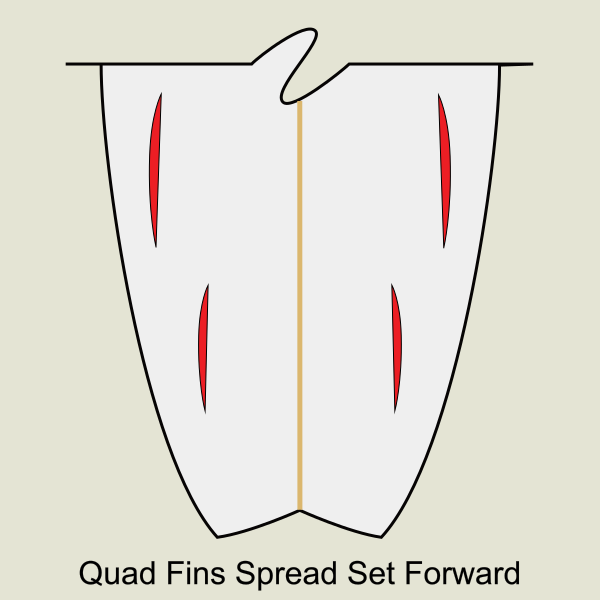 |
| |
 |
| |
|
| |
These images illustrate Quad fin placements. Quads can be clustered tight or spread further apart. Clustered tight they will be more pivotal as the two fins have a narrower combined base. Separated moderately the two fins have a longer combined base creating significant power, projection, acceleration, and speed. Spread further apart they will be more pivotal again as the base of two fins become separated and function independently. Independent of proximity to each other quads placed closer to the tail will have a tighter natural turning radius. Placed further forward quads will have more projection. Reverse quad fin placement considering the larger trailing fin can be further forward than traditional quad fin placement. |
| |
|
| |
REVERSE QUADS An evolving quad option features a smaller forward
rail fin and a larger trailing fin similar in function, effect, and
efficiency to Twinzers. Reverse quads are particularly efficient in
heavy water and XXL conditions minimizing drag, eliminating
cavitation, and maximizing control. Reverse quad XXL templates may be
neutral, pivotal, or projection oriented. Common forward or rail fins
for the reverse quad configuration are 4 1/8" deep and have a 4 1/8"
base. Common trailing fins have a 4 3/8" deep and are 4 3/8" base.
Forward rail fin foils for heavy water and XXL conditions are 60/40.
Trailer fins feature a symmetrical 50/50 foil. The dimensions,
surface area, and foils are designed to maximize acceleration, speed,
control, and predictability in heavy water and XXL conditions.
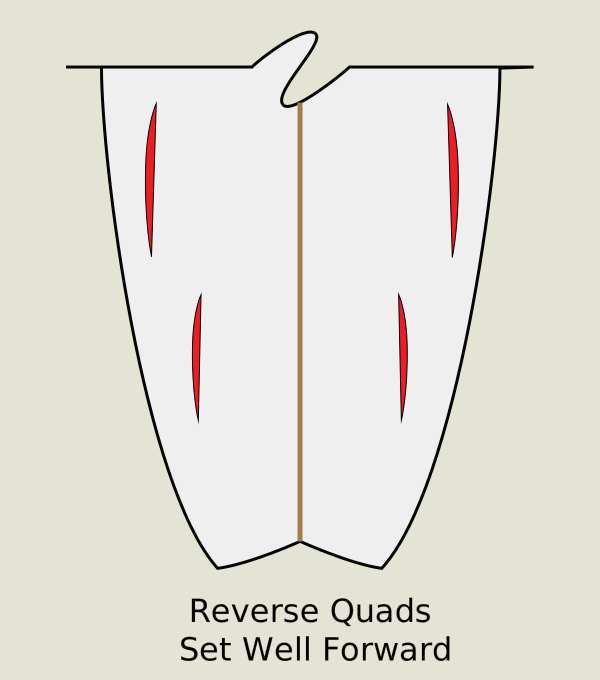
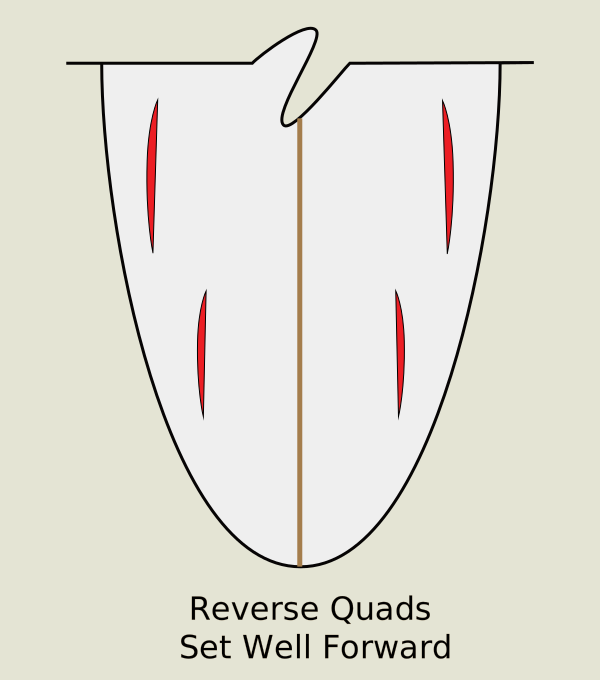
Reverse quads are equally functional and efficient for all around conditions offering the same performance features. Similar to the heavy water XXL fins templates for all around reverse quads may be neutral, pivotal, or projection oriented. Common forward or rail fins for the reverse quad configuration are 4 5/16" deep and have a 4 5/16" base. Common trailing fins are 4 9/16" deep and have a 4 9/16" base. Forward rail fin foils for all around conditions are flat or 80/20. Trailer fins feature a 60/40 or 80/20 foil. The dimensions, surface area, and foils are designed to generate acceleration, speed, control, and predictability in all conditions. The layout and position of reverse quad configurations vary as they do with all fin configurations. Clustered close together with the trailer close to the forward fin the fins feature a combined base of two fins increasing acceleration, speed, and projection. The tight proximity can also facilitate a pivotal turn. Spread moderately further apart creates a longer combined base maximizing acceleration, speed, and projection. Spread even further apart the fins become more independent and the natural arc of turns has a tighter radius and is more pivotal. All configurations offer more projection placed further forward and be more pivotal placed further aft. |
| |
 |
| |
|
| |
These images illustrate Reverse Quad fin placement. Considering the larger trailing fin reverse quad fin placement can be further forward than traditional quad fin placement. Reverse Quads just like traditional Quads can be clustered tight or spread further apart. Clustered tight they will be more pivotal as the two fins have a narrower combined base. Separated moderately the two fins have a longer combined base creating significant power, projection, acceleration, and speed. Spread further apart they will be more pivotal again as the base of two fins become separated and function independently. Independent of proximity to each other reverse quads placed closer to the tail will have a tighter natural turning radius. Placed further forward reverse quads will have more projection. |
| |
|
| |
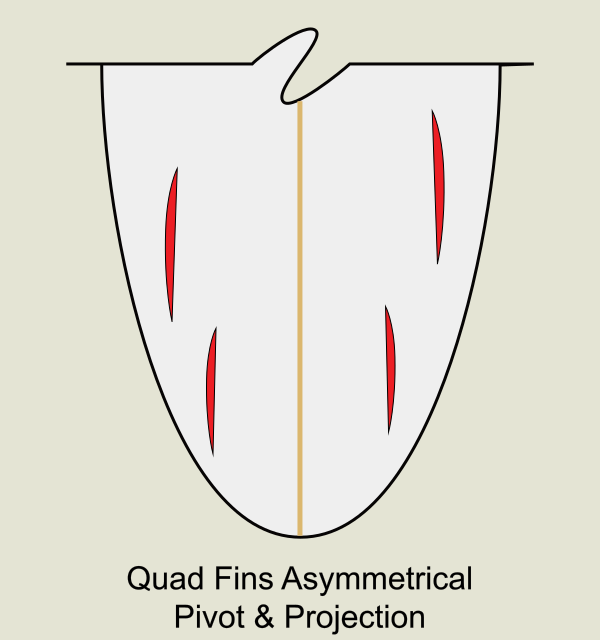
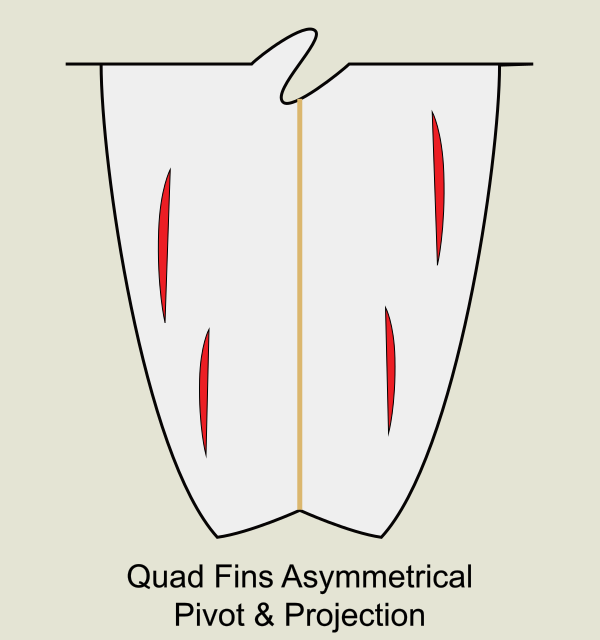
ASYMMETRICAL QUADS Asymmetrical quads position the fins differently on the toe and heel side of a board to maximize specific performance features for toe and heel side surfing. Templates, dimensions, and foils are generally the same as quad foils designed for fundamental performance features. However, asymmetrical fin design features can vary as well matching templates, dimensions, and foils to perfomance features. |
| |
 |
| |
|
| |
These images illustrate asymmetrical quad fin placements. Asymmetrical quads position the fins differently on the toe and heel side of a board to maximize performance features for toe and heel side surfing. Quads can be clustered tight or spread further apart and can be placed further forward or further aft. Clustered tight they will be more pivotal as the two fins have a narrower combined base. Separated moderately the two fins have a longer combined base creating significant power, projection, acceleration, and speed. Spread further apart they will be more pivotal again as the base of two fins become separated and function independently. Independent of proximity to each other quads placed closer to the tail will have a tighter natural turning radius. Placed further forward quads will have more projection. |
| |
|
| |
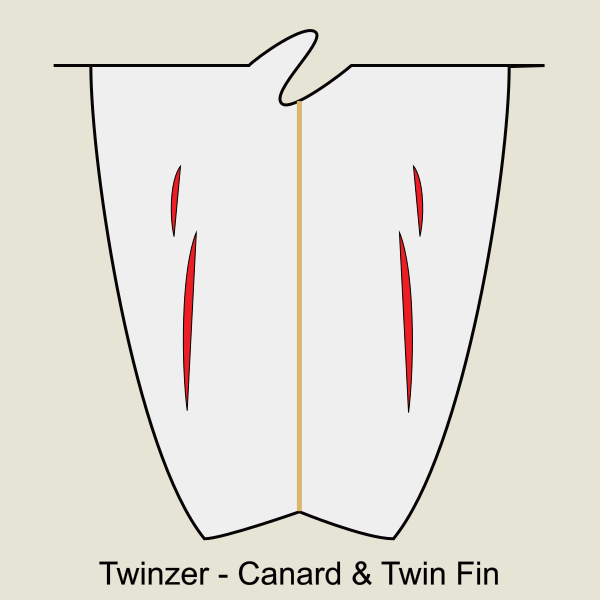
TWINZERS Twinzers feature a twin fin and a fore fin referred to as a canard. The twin fin in the twinzer configuration is positioned the same as on a pure twin fin dependent on the board's dimensions. The canard is offset towards the rail approximately 1" overlapping the twin fin by 1/4" to 1/2". The twin fin's depth may vary from 5" to 5 1/2"and the canard 3" to 3 1/2" deep. The canard reduces turbulence, prevents cavitation and adds stability and control to twin fin designs. |
| |
 |
| |
|
| |
This image illustrates Twinzer fin placement. The twin fin is positioned as a typical twin fin, generally 1 3/4" off the rail with toe aligned a few inches off the nose. Distance from the tail is determined by the length of the board. The canard is offset about 1" and overlaps the twin fin about 1/4" to 1/2". Twinzers placed closer to the tail will have a tighter natural turning radius. Placed further forward twinzers will have more projection. |
| |
|
| |
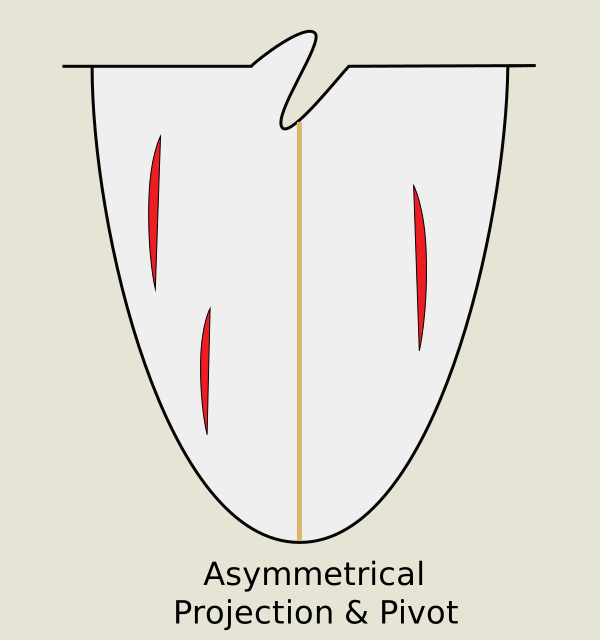
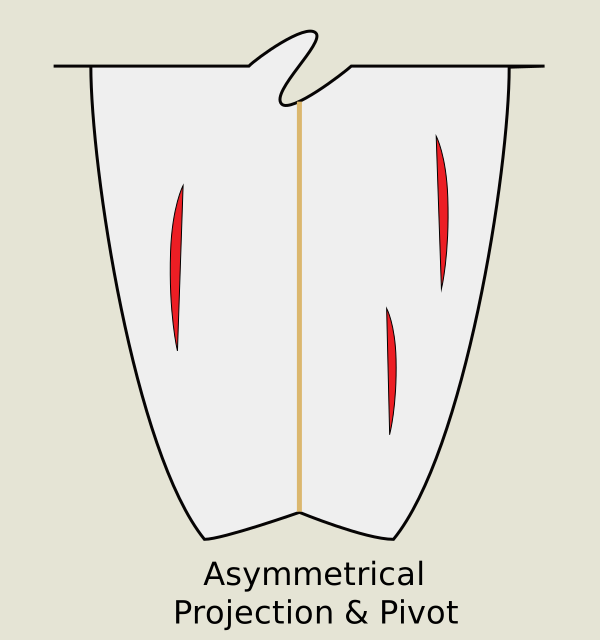
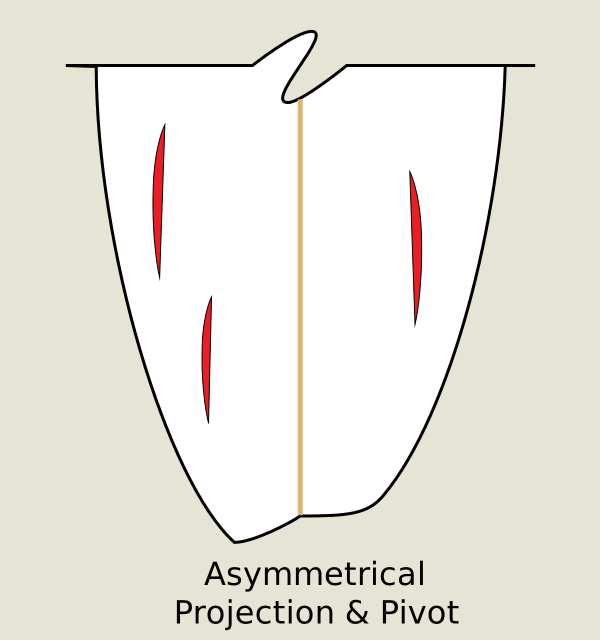
ASYMMETRICALS Asymmetrical fin designs can feature many designs, layouts and configurations. They can feature combinations of single fins, twin fins, thrusters and quads. These images feature quads on one rail and twin or thruster or quad without a trailer on the other rail. The positioning and juxtaposition of the fins can be varied for performance features. The rail with the quads offers maximum power, projection and acceleration. The rail with twin or thruster or quad without trailer offers maximum pivotal maneuverability. Both of these rail and fin combinations offer a wide range of horizontal and vertical angles out of turns. Creative and imaginative combinations can be designed for venues, toe side and heel side turns, and surfer preferences. |
| |
 |
| |
 |
| |
|
| |
These images illustrate Asymmetrical fin placement. One rail features a quad layout and the other rail features a twin or thruster or quad without a trailer. The rail with the quad layout offers maximum power, projection, and acceleration. The rail with twin or thruster or quad without trailer offers maximum pivotal maneuverability. |
| |
|
| |
LINKS to FIN TECHNOLOGY & FIN MANUFACTURERS
NVS G10 Fins NVS Fin Guide - Fin Technology Futures Fins Futures Fins - Finology True Ames Fins True Ames Fin Guide - Fin Technology |
| |
< top of page > |