

|
|
|
| Class | Short Board | Maximum Performance | |
| |
|
| Custom Orders |
| |
|
| |
[ The Redtail Pocket Rocket ]
DESCRIPTION The Redtail Pocket Rocket is the original Natural Curves high performance shortboard. Before models and marketing came design and performance. The first Redtails featureded nuanced rockers, profiles, foils, rails, bottom contours, and outlines, essential design components relevant to this day. The Redtail emerged in late 1980s and the design has evolved over decades of surfing and shaping embracing all the variables of surfing and surfboard design. The design continues to evolve with every surf, design, and shaping session. The Redtail offers exceptional performance in all conditions, in marginal and critical waves, and in any size wave in it's range. Every Redtail is designed and shaped one at a time to custom specifications. DESIGN FEATURES ROCKERS Redtail rocker options include the three primary rockers, Speed Box rocker designed for all conditions, Continuous rocker designed primarily for quality, critical, or barreling waves, and Relaxed rocker designed for marginal and moderate waves and conditions. PROFILE & FOIL Crisp profile and foil with sufficient volume integrated into these designs to support the surfer, accelerate and carry speed, yet foiled appropriately in the nose, tail, and rails for complete control. OUTLINES Round pin, squash, thumb, or swallow. BOTTOM CONTOURS Shallow vee in entry, moderate single concave starting between entry and wide point. Concaves reach maximum depth near the leading edge of fin array fading through the fins to the tail. Optional single or single to double concave from the wide point to the tail. The single and the single to double concaves both offer considerable lift, acceleration, and speed. The vee to double to single concave reverse vee bottom offers maximum directional stability and maximum power and acceleration. RAILS Moderately low crowned rail profile. Rail volume varies with surfer's size, technique, and preference - more rail volume for techniques that generates greater displacement - less rail volume for light footed techniques. See essays on volume and displacement for more insight on how surfer and technique relate to volume and rail volume in board design. |
| |
|
| |
 |
| |
Redtail Squash
6' 2" x 19 1/4" x 2 1/2" x 32 L |
| |
|
| |
$800.00
See
custom orders
for details
$760.00 Grom boards to 5' 6" |
| |
|
| |
| |
|
| |
REDTAIL ROCKER OPTIONS |
| |
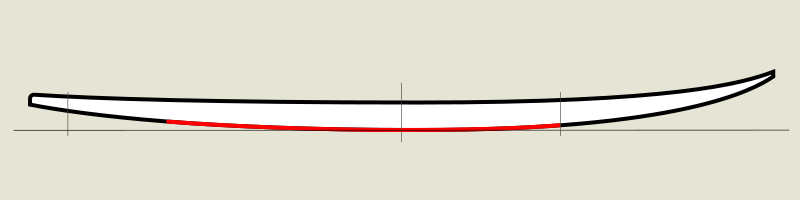
SPEED BOX rocker is the primary rocker option for the Redtail.
These designs feature an area of reduced curves under the surfer's
torso and hips when paddling and under the surfer's stance when
surfing. The Speed Box can vary moderately in length and position.
The integrated tail and entry rockers are tuned to surfer's technique
and surf venues and conditions. This rocker profile can be fine tuned
to a wide variety of conditions.
|
| |
SPEED BOX ROCKER - Note the area of straighter curves through the mid section of the board with accelerated nose and tail rocker with the Speed Box highlighted in red |
| |
|
| |
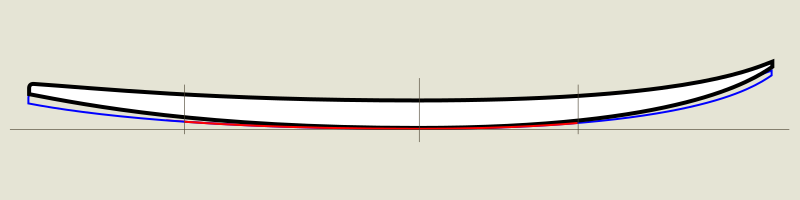
CONTINUOUS rocker features a continuous curve from nose to tail
with minimum reduction of curve mid board. They excel in crisp,
critical, steep, and barreling waves. These conditions generally
provide all the speed and power required for solid performance
surfing. The continuous rocker profile keeps the board free and loose
in the pocket and in the tight transitions experienced in critical
and challenging waves without compromising projection, acceleration,
and speed.
|
| |
CONTINUOUS ROCKER - Note the constant curve from nose to tail compared with the Speed Box Rocker highlighted in blue and the Speed Box Rocker's speed box highlighted in red. |
| |
|
| |
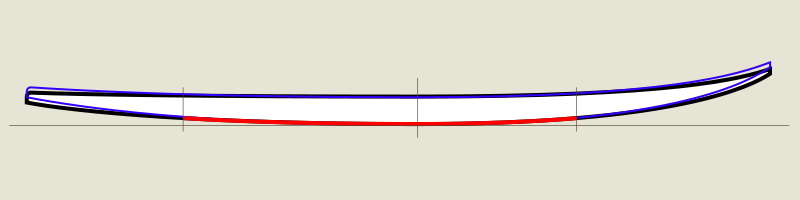
RELAXED ROCKERS feature low tail rocker and relaxed entry rocker.
This rocker profile excels in marginal and moderate conditions by
generating and carrying speed in and out of the pocket without
sacrificing control in powerful surf.
|
| |
RELAXED ROCKER - Note the relaxed lower rocker in the nose and tail compared with the Speed Box Rocker highlighted in blue. The Relaxed Rocker's speed box is highlighted in red |
| |
|
| |
REDTAIL BOTTOM CONTOUR OPTIONS |
| |
|
| |
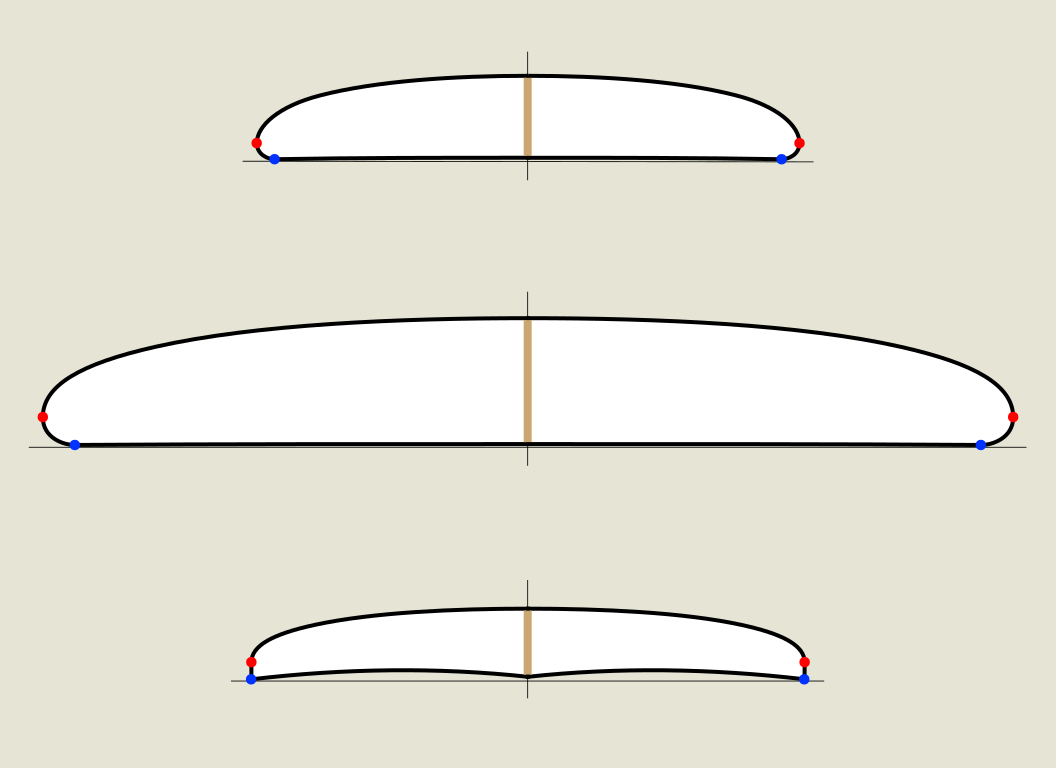
SINGLE to DOUBLE CONCAVE with crowned deck and moderately crowned rails. Single concaves and single to double concaves performance varies moderately. The way water flows from the rail the peak of the double concave at the stringer (center of the board) creates additional lift and with it's spine offers directional stability through turns. Single to double concave provides acceleration, projection, speed, and maneuverability. Crowned deck and rail profiles maintain control and stability. |
| |
|
| |
SINGLE to DOUBLE CONCAVE |
| |
|
| |
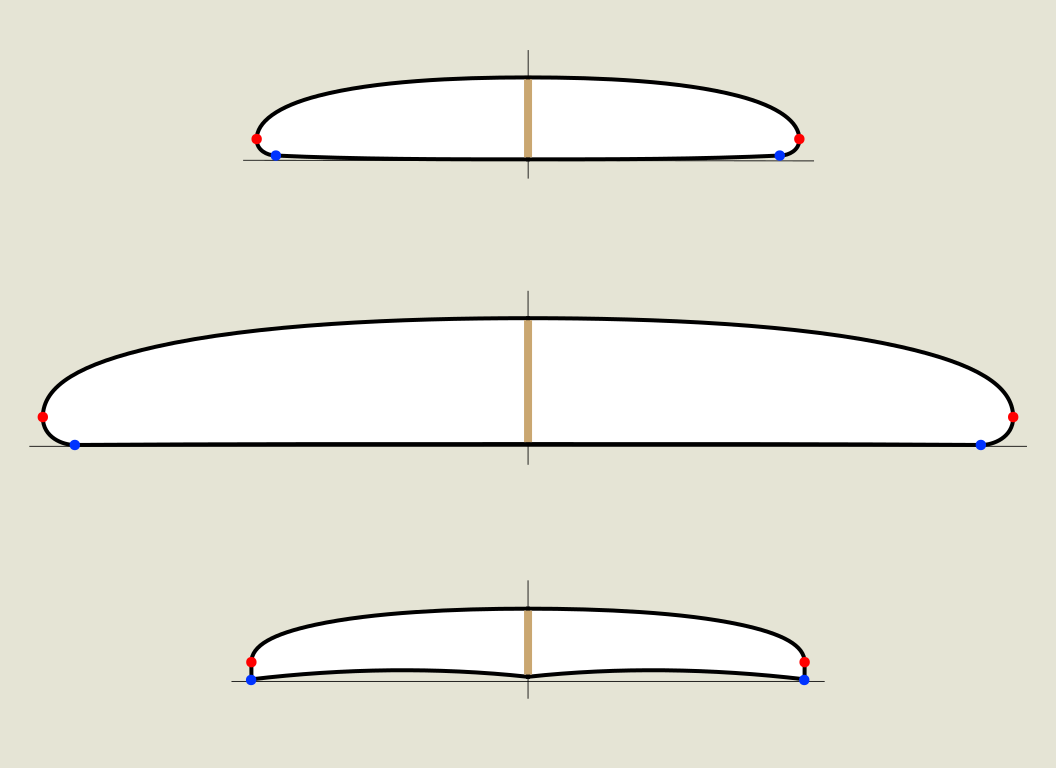
VEE to SINGLE to DOUBLE CONCAVE with crowned deck and moderately crowned rails. The Vee in nose and entry create additional control and stability and help initiate rail to rail transitions. The way water flows from the rail the peak of the double concave at the stringer (center of the board) creates additional lift and with it's spine offers directional stability through turns. Single to double concave provides acceleration, projection, speed, and maneuverability. Crowned deck and rail profiles maintain control and stability. |
| |
|
| |
VEE to SINGLE to DOUBLE CONCAVE |
| |
|
| |
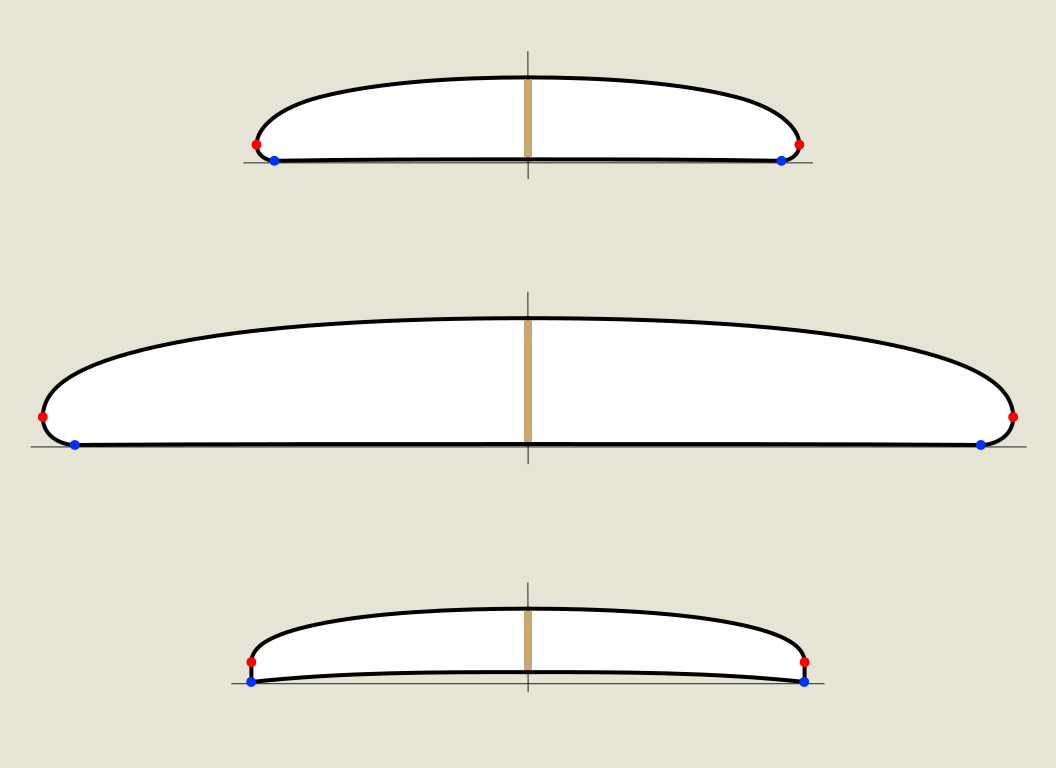
SINGLE CONCAVE with crowned deck and moderately crowned rails. Single concaves provide acceleration, projection, speed, and maneuverability. Water flows in a smooth arc from rail to rail in single concaves enabling powerful, stable, and predictable turns. The smooth rail to rail water flow enables maximum controlled power through turns and navigating barrels with nuanced turning radii from a wide variety of angles. Water flows rail to rail at any angle in a single concave and organically creates maximum lift and performance features. Single concaves provides acceleration, projection, speed, and maneuverability. Crowned deck and rail profiles maintain control and stability. Crowned deck and rail profiles maintain control and stability. |
| |
|
| |
SINGLE CONCAVE |
| |
|
| |
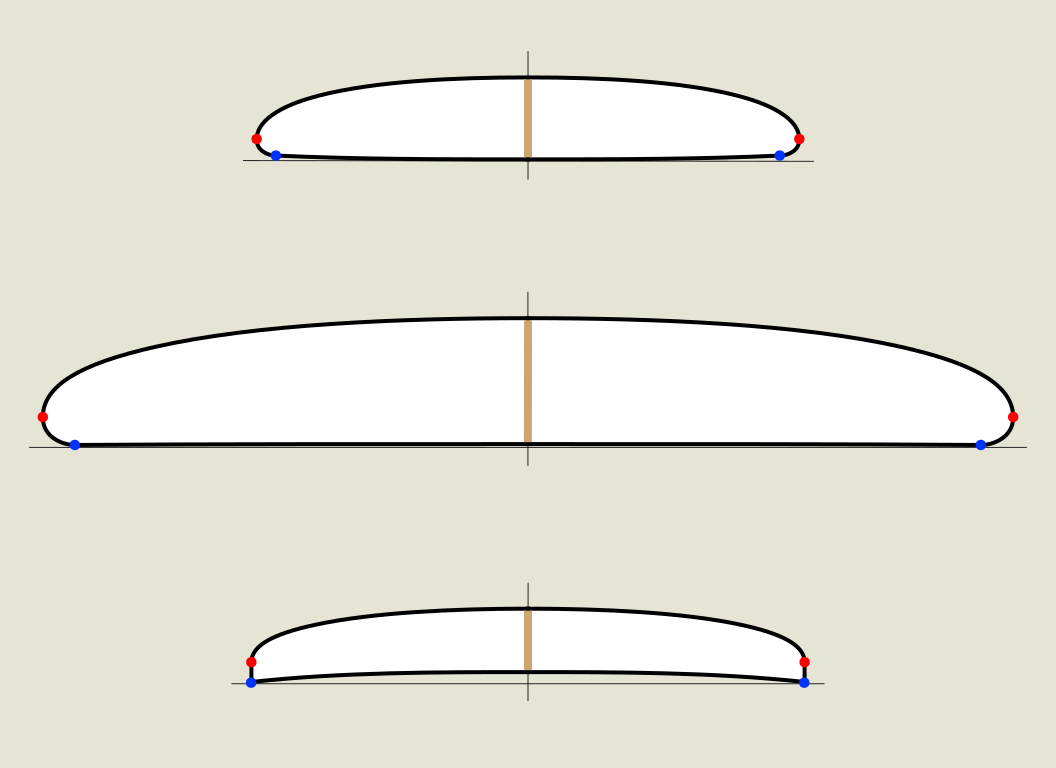
VEE to SINGLE CONCAVE with crowned deck and moderately crowned rails. The Vee in nose and entry create additional control and stability and help initiate rail to rail transitions. As water flows from rail to rail at any angle in a single concave it organically creates maximum lift and performance features. Single concaves provides acceleration, projection, speed, and maneuverability. Crowned deck and rail profiles maintain control and stability. |
| |
|
| |
VEE to SINGLE CONCAVE |
| |
|
| |
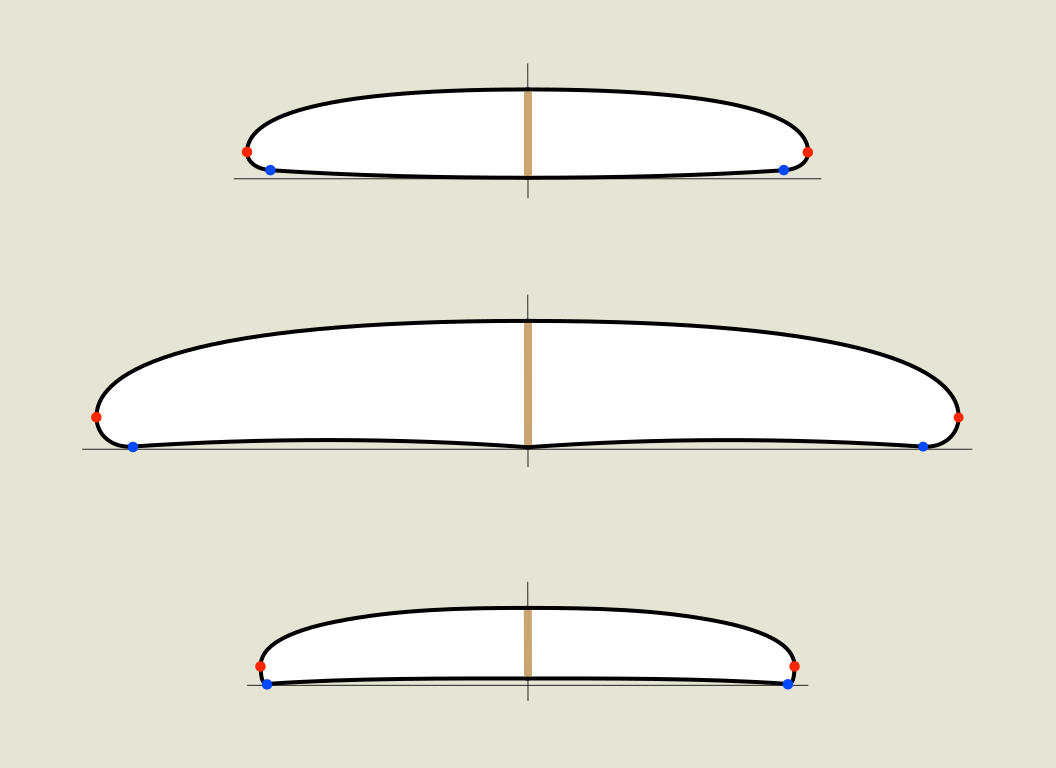
VEE to DOUBLE to SINGLE CONCAVE with crowned deck and moderately crowned rails. This is an intriguing bottom that offers great performance. The vee to double from nose to entry to wide point offer control and lift and the double to single wide point to tail offer power, projection, and maneuverability. Nuanced variations in tail rocker create a variety of vertical angles of projection out of powerful bottom turns. |
| |
|
| |
VEE to DOUBLE to SINGLE CONCAVE |
| |
|
| |
SURFING A REDTAIL |
| |
|
| |
 |
| |
|
| |
 |
| |
|
| |

|
| |
|
| |
 |
| |
|
| |
REDTAIL DIMENSIONS |
| |
Dimensions are guidelines and may vary based on surfer, venues, and conditions |
| |
|
||||||||||||||||||||||||||||||||||||||||||||||||||||||||||||||||||||||||||||||||||||||||||||||||||||||||||||||||||||||||||||||||||||
|
|||||||||||||||||||||||||||||||||||||||||||||||||||||||||||||||||||||||||||||||||||||||||||||||||||||||||||||||||||||||||||||||||||||
| < top of page > |